
check back in spring 2027!
grow your own bouquet!
curated for their stem length and vase life, there are annuals, perennials, cut flowers, foliage and fillers; everything you need to grow your own bouquet.
cut and come again
cut and come again
Filters
Filters
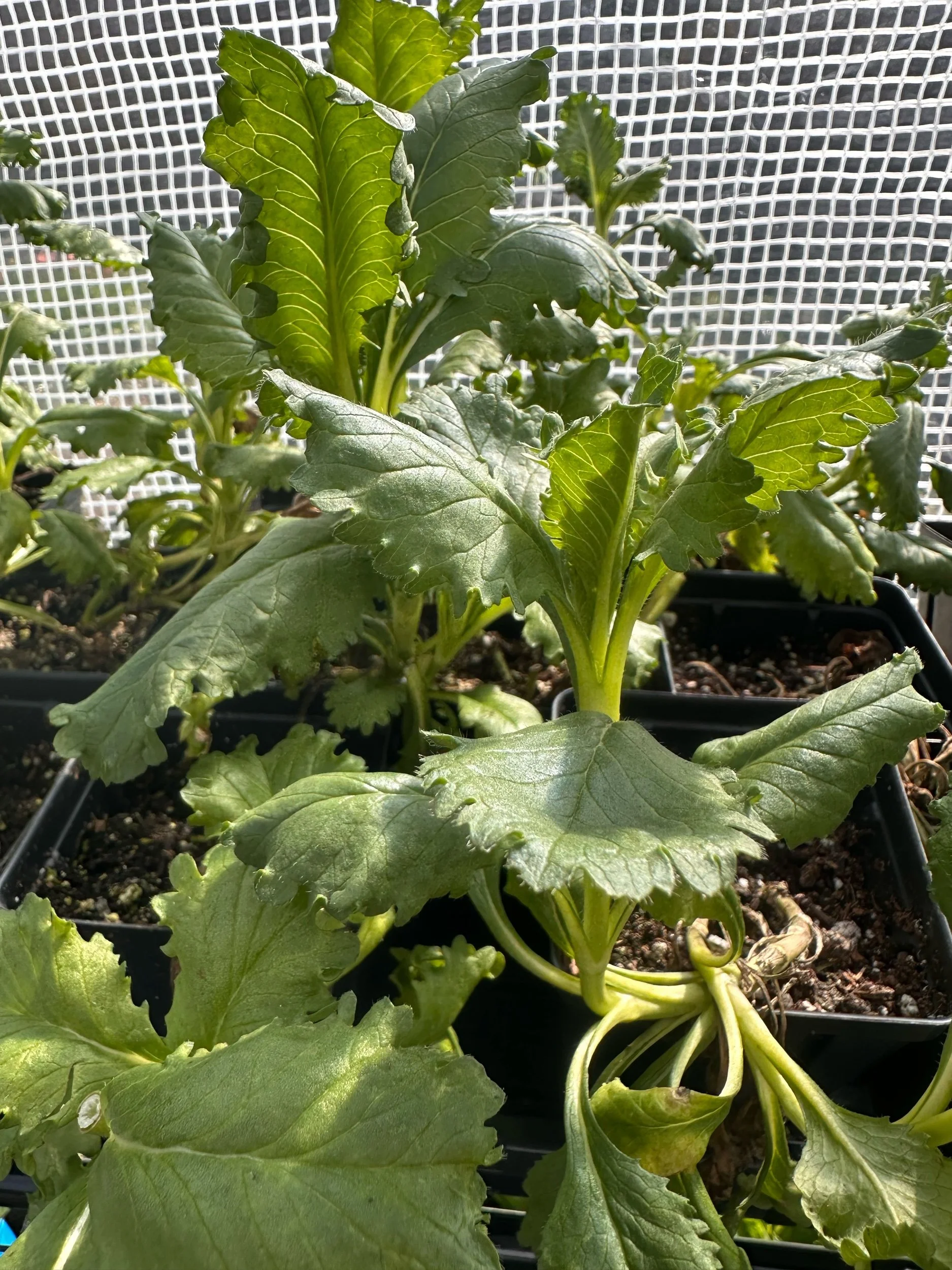
Scabiosa Focal Scoop™ are only available through specialty nurseries for cut flower growers. Take advantage of this opportunity to add something truly special to your garden.
Focal Scoop™ is bigger the Scoop™ series (flowers up to 10cm across), on longer and stronger stems. Those who have had trouble with necks snapping off (indicative of a Calcium issue) may have better luck with this new line from the folks at Danziger.
They are patent protected and propagation is strictly prohibited. Got it? We only get amazing new varieties like these if we play by the rules and give the breeders their share (which they clearly deserve).
Plugs sourced from Gro ‘n Sell/Farmer Bailey and then lovingly grown to have a larger root ball filling a 3.5” deep pot.
Specs:
3.5” deep pot
Common Name
Scabiosa
Genus
Scabiosa
Species
Hybrid of S. atropurpurea and S. caucasica
Family
Caprifoliaceae
Life Cycle
Tender perennial, usually treated as annual.
Netting / Staking
1 layer of support netting.
Temperature Range
32 to 80F
Spacing
2 rows per bed, 12" between plants. These get very large.
Soil Preference
Well drained soil of medium fertility.
Day Length
Facultative long day.
Pinching
Yes. Plugs will likely be pinched on arrival. If not, pinch out the tip once growth resumes after transplant.
When to Plant
Fall or spring, when soil is cool (below 55F). They prefer cool frost free conditions.
Harvesting
These are extremely productive, easily producing 20-30 stems per plant. Harvest when 1/3 of the florets are open, or when the first ring of florets has opened around the outside of the flower.
Post Harvest Care
A holding solution will increase vase life.
Diseases / Insects
No major issues in most settings.
Bailey's Notes
Scoop Scabiosa have revolutionized the use of Scabiosa in the cut flower world. They are larger and longer lasting than their predecessors. The main complaint is that they are TOO productive. Keep spent flowers cut off to encourage more bloom production. In hot summer locations, the plants may stop production for a couple months and then regrow as autumn temperatures settle in. Cut back the plant to a few inches and allow to regrow.
PLUG SOURCE:
*Item description and growing information sourced from the seed company and linked above
** if there are no images of the product it means that I have not grown that specific variety in the past or don’t have a decent photo readily available. product images are available to review on the seed company’s website
Scabiosa Scoop™ are only available through specialty nurseries for cut flower growers. Take advantage of this opportunity to add something truly special to your garden.
They are patent protected and propagation is strictly prohibited. Got it? We only get amazing new varieties like these if we play by the rules and give the breeders their share (which they clearly deserve).
Plugs sourced from Gro ‘n Sell/Farmer Bailey and then lovingly grown to have a larger root ball filling a 3.5” deep pot.
Specs:
3.5” deep pot
Common Name
Scabiosa
Genus
Scabiosa
Species
Hybrid of S. atropurpurea and S. caucasica
Family
Caprifoliaceae
Life Cycle
Tender perennial, usually treated as annual.
Netting / Staking
1 layer of support netting.
Temperature Range
32 to 80F
Spacing
2 rows per bed, 12" between plants. These get very large.
Soil Preference
Well drained soil of medium fertility.
Day Length
Facultative long day.
Pinching
Yes. Plugs will likely be pinched on arrival. If not, pinch out the tip once growth resumes after transplant.
When to Plant
Fall or spring, when soil is cool (below 55F). They prefer cool frost free conditions.
Harvesting
These are extremely productive, easily producing 20-30 stems per plant. Harvest when 1/3 of the florets are open, or when the first ring of florets has opened around the outside of the flower.
Post Harvest Care
A holding solution will increase vase life.
Diseases / Insects
No major issues in most settings.
Bailey's Notes
Scoop Scabiosa have revolutionized the use of Scabiosa in the cut flower world. They are larger and longer lasting than their predecessors. The main complaint is that they are TOO productive. Keep spent flowers cut off to encourage more bloom production. In hot summer locations, the plants may stop production for a couple months and then regrow as autumn temperatures settle in. Cut back the plant to a few inches and allow to regrow.
PLUG SOURCE:
*Item description and growing information sourced from the seed company and linked above
** if there are no images of the product it means that I have not grown that specific variety in the past or don’t have a decent photo readily available. product images are available to review on the seed company’s website
Beloved by pollinators and tea aficionados alike. A perennial that blooms in the first year, it is hardy from USDA zones 4-8. Considered extremely easy to grow, this is a top choice for beds, borders, herb gardens, and even containers. The leaves and flowers are used to make one of the best herb teas; the foliage possesses a naturally sweet, wonderful anise taste and fragrance. Bees love the pretty purple flower spikes! There are myriad medicinal and culinary uses for this amazing plant.
Specs:
2” soil block
LIGHT PREFERENCE:
Sun.
PLANT HEIGHT:
24-30". Support may be needed to ensure straight stems.
PLANT SPACING:
12-18".
HARDINESS ZONES:
Zones 5-9.
SOIL REQUIREMENTS:
Average to rich soil with good drainage.
HISTORY:
Native to North America. Known as a bedding plant popular for its edible flowers and as a pollinator attractor.
USES:
Ornamental with aromatic, edible leaves
Perennial beds, tea garden, pollinator garden. Visited by a range of bees, butterflies, and hummingbirds
SCIENTIFIC NAME:
Craspedia globosa
SEED SOURCE:
*Item description and growing information sourced from the seed company and linked accordingly
** if there are no images of the product it means that I have not grown that specific variety in the past. product images are available to review on the seed company’s website
Unique coral-pink tassels.
Coral Fountain is a great complement to Emerald Tassels and Love-Lies-Bleeding. All have similar plant habits, days to maturity, and great presence in arrangements. Common names include amaranth and tassel flower.
Specs:
Plant Height: up to 6’
2” soil block
LIGHT PREFERENCE:
Sun.
PLANT HEIGHT:
Varies Providing support is advised.
PLANT SPACING:
12-15". For upright, plume types, thinner and more manageable stems can be achieved using a tighter spacing of 3-6".
HARDINESS ZONES:
Annual.
VASE LIFE:
7-10 days.
HARVEST:
Fresh - When at least 3/4 of the flowers on the inflorescence are open.
Dried - Seed has begun to set and flowers feel firm.
Drying - Stand up trailing varieties in a bucket or any tall container to maintain draped appearance. Hang upright varieties to dry.
SOIL:
Well-drained soil. pH: 6-7 preferred.
USES:
Fresh or dried cut flower, back of bed, accent in borders, containers.
NOTES:
Support advised.
SEED SOURCE:
*Item description and growing information sourced from the seed company and linked accordingly
** if there are no images of the product it means that I have not grown that specific variety in the past. product images are available to review on the seed company’s website
Darkest red amaranth in our trials.
Ideal color and form for late summer and fall arrangements. More useful than other upright types because of its gracefully arched, feathery plumes. Dark red arched and airy flower heads. When plants are young and leaves are tender, the foliage makes a nice edible green. Also known simply as amaranth.
Specs:
Plant Height: up to 6’
2” soil block
LIGHT PREFERENCE:
Sun.
PLANT HEIGHT:
Varies Providing support is advised.
PLANT SPACING:
12-15". For upright, plume types, thinner and more manageable stems can be achieved using a tighter spacing of 3-6".
HARDINESS ZONES:
Annual.
VASE LIFE:
7-10 days.
HARVEST:
Fresh - When at least 3/4 of the flowers on the inflorescence are open.
Dried - Seed has begun to set and flowers feel firm.
Drying - Stand up trailing varieties in a bucket or any tall container to maintain draped appearance. Hang upright varieties to dry.
SOIL:
Well-drained soil. pH: 6-7 preferred.
USES:
Fresh or dried cut flower, back of bed, accent in borders, containers.
NOTES:
Support advised.
SEED SOURCE:
*Item description and growing information sourced from the seed company and linked accordingly
** if there are no images of the product it means that I have not grown that specific variety in the past. product images are available to review on the seed company’s website
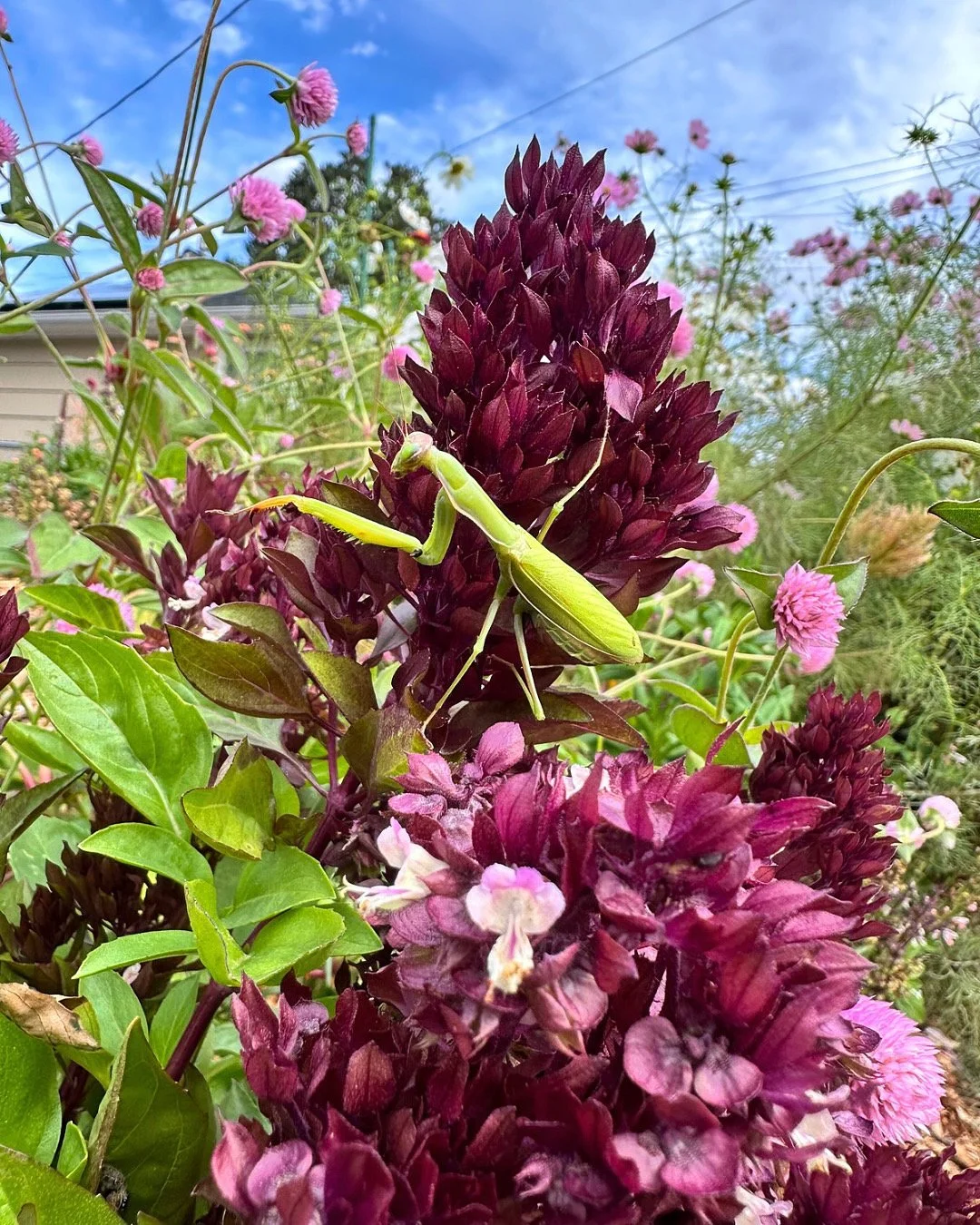
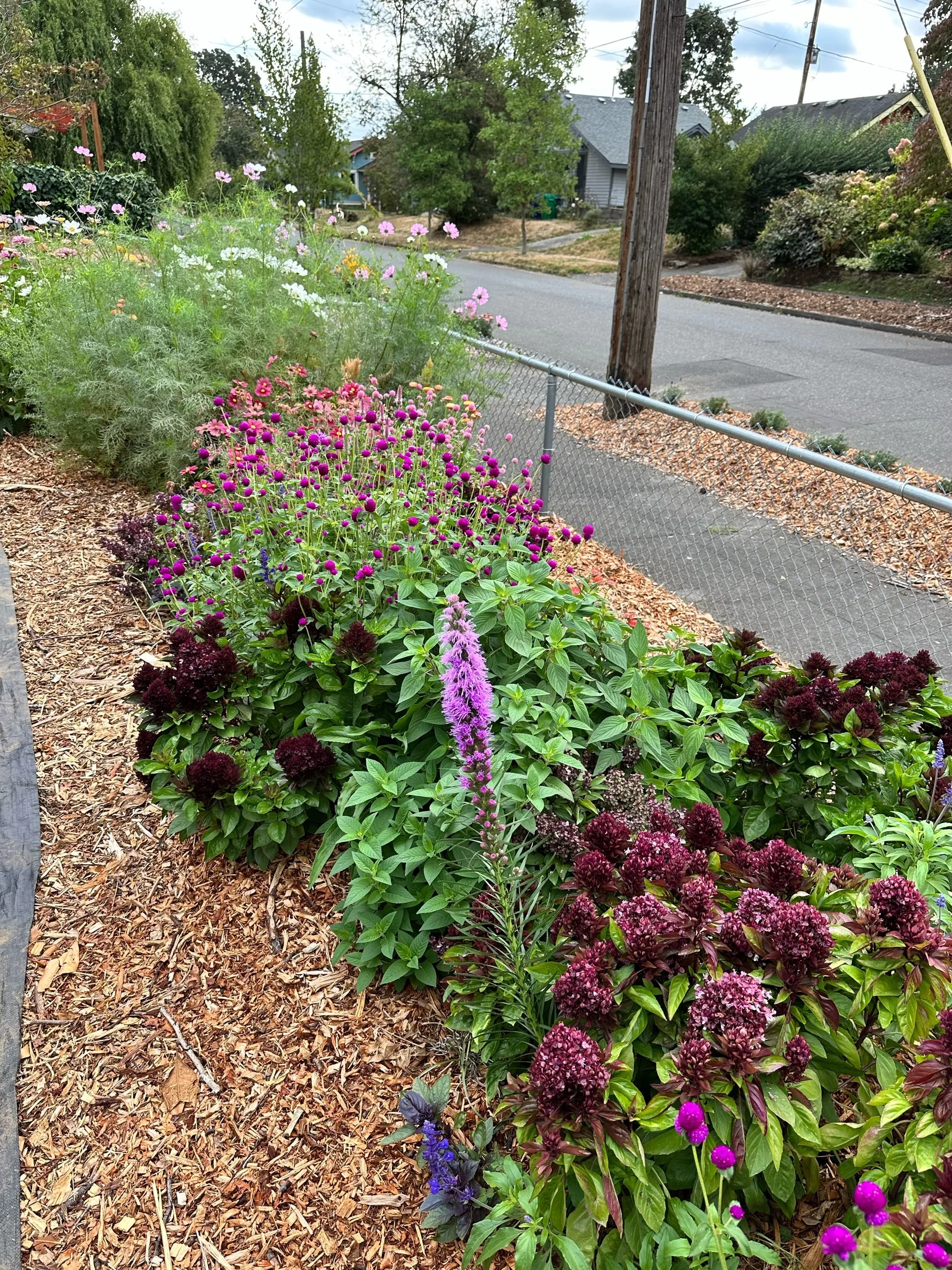
(Ocimum basilicum). A delicious, fragrant culinary basil that produces huge, rich purple flower heads! These are fantastic in flower arrangements. Try the spicy-sweet leaves in your favorite recipes. They are perfect for salads, soups, and curries, and leaves go well in many Mexican and Asian foods. A magnificent and grand variety for your garden and kitchen. Amazing flavor!
Cardinal basil thrives in warm, sunny conditions, and needs 8-12 hours of direct sunlight daily. It grows best in well-draining, fertile soil with a pH range of 6.0 to 7.5. Consistent moisture is key, but the soil should never become soggy. To encourage lush, bushy growth, pinch off the growing tips of the plant regularly and remove any flowers unless you're growing it for ornamental purposes.
Specs:
Plant Height: 12-24’
2” soil block
LIGHT PREFERENCE:
Sun.
PLANT HEIGHT:
varies
PLANT SPACING:
8-12".
HARDINESS ZONES:
Annual.
SOIL:
Well-drained soil
USES:
edible, fresh or dried cut flower, back of bed, accent in borders, containers.
NOTES:
Water Cardinal basil regularly to keep the soil evenly moist but avoid waterlogging. Apply a balanced fertilizer or compost every 2-4 weeks to support growth and promote flavorful leaves. Protect plants from pests like aphids and whiteflies using organic pest control methods such as neem oil or insecticidal soap.
HOW TO SAVE SEEDS:
Flower heads mature progressively from the bottom of the stem to the top.
When the bottom seed head starts to turn brown, the stem can be cut and allowed to dry away from direct sun in a well-ventilated area.
Rub dried raceme over a fine wire mesh and winnow off the chaff.
Place chaff in a bowl and carefully swirl contents around. Seeds will gather at the bottom of the bowl.
Tip the bowl so that the chaff can be discarded and blow the rest out carefully.
SEED SOURCE:
*Item description and growing information sourced from the seed company and linked accordingly
** if there are no images of the product it means that I have not grown that specific variety in the past. product images are available to review on the seed company’s website
(Ocimum basilicum). A cinnamon twist on one of our favorite garden herbs. Cinnamon basil is believed to have originated in Mexico, and indeed there are many recipes and uses for this piquant basil in Mexican cuisine. The light cinnamon and anise flavor adds the perfect touch to fruit salads, desserts, and savory preparations. The leaves make a soothing cup of tea. Cinnamon basil contains many vitamins and minerals. It also attracts a wide range of pollinators.
Cinnamon basil thrives in warm, sunny conditions, and needs 8-12 hours of direct sunlight daily. It grows best in well-draining, fertile soil with a pH range of 6.0 to 7.5. Consistent moisture is key, but the soil should never become soggy. To encourage lush, bushy growth, pinch off the growing tips of the plant regularly and remove any flowers unless you're growing it for ornamental purposes.
Specs:
Plant Height: 12-24’
2” soil block
LIGHT PREFERENCE:
Sun.
PLANT HEIGHT:
varies
PLANT SPACING:
8-12".
HARDINESS ZONES:
Annual.
SOIL:
Well-drained soil
USES:
edible, fresh foliage, back of bed, accent in borders, containers.
NOTES:
Water Cinnamon basil regularly to keep the soil evenly moist but avoid waterlogging. Apply a balanced fertilizer or compost every 2-4 weeks to support growth and promote flavorful leaves. Protect plants from pests like aphids and whiteflies using organic pest control methods such as neem oil or insecticidal soap.
HOW TO SAVE SEEDS:
Flower heads mature progressively from the bottom of the stem to the top.
When the bottom seed head starts to turn brown, the stem can be cut and allowed to dry away from direct sun in a well-ventilated area.
Rub dried raceme over a fine wire mesh and winnow off the chaff.
Place chaff in a bowl and carefully swirl contents around. Seeds will gather at the bottom of the bowl.
Tip the bowl so that the chaff can be discarded and blow the rest out carefully.
SEED SOURCE:
*Item description and growing information sourced from the seed company and linked accordingly
** if there are no images of the product it means that I have not grown that specific variety in the past. product images are available to review on the seed company’s website
(Ocimum basilicum). An extra flavorful, rich, and sweet basil with fragrant deep violet foliage brings drama and fragrance to your garden design! This variety was bred at the University of Connecticut in the 1950s, when Professor Joseph M. Lent and his colleague John Scarchuck set out to improve the existing purple basil variety, which had inconsistent color issues. A purple-splotched variety from Turkey was selected from countless samples from across the globe. The result was this deeply purple, vigorous variety, which they named Dark Opal. This exemplary basil took home a bronze medal in the 1962 All-America's Selection award.
Dark Purple Opal basil thrives in warm, sunny conditions, and needs 8-12 hours of direct sunlight daily. It grows best in well-draining, fertile soil with a pH range of 6.0 to 7.5. Consistent moisture is key, but the soil should never become soggy. To encourage lush, bushy growth, pinch off the growing tips of the plant regularly and remove any flowers unless you're growing it for ornamental purposes.
Specs:
Plant Height: 12-24’
2” soil block
LIGHT PREFERENCE:
Sun.
PLANT HEIGHT:
varies
PLANT SPACING:
8-12".
HARDINESS ZONES:
Annual.
SOIL:
Well-drained soil
USES:
edible, fresh foliage, back of bed, accent in borders, containers.
NOTES:
Water basil regularly to keep the soil evenly moist but avoid waterlogging. Apply a balanced fertilizer or compost every 2-4 weeks to support growth and promote flavorful leaves. Protect plants from pests like aphids and whiteflies using organic pest control methods such as neem oil or insecticidal soap.
HOW TO SAVE SEEDS:
Flower heads mature progressively from the bottom of the stem to the top.
When the bottom seed head starts to turn brown, the stem can be cut and allowed to dry away from direct sun in a well-ventilated area.
Rub dried raceme over a fine wire mesh and winnow off the chaff.
Place chaff in a bowl and carefully swirl contents around. Seeds will gather at the bottom of the bowl.
Tip the bowl so that the chaff can be discarded and blow the rest out carefully.
SEED SOURCE:
*Item description and growing information sourced from the seed company and linked accordingly
** if there are no images of the product it means that I have not grown that specific variety in the past. product images are available to review on the seed company’s website
Versatile blooms in vibrant magenta-purple.
Productive plants produce sturdy stems with 2–4" clusters of flower spikes. Blooms tuck neatly into bouquets and add a touch of sparkle. Plants flower slightly earlier and are slightly shorter than some of the other colors in the Celway series. Similar to Ruby Parfait in bloom color and size, though Celway Purple flowers later on taller plants and sturdier stems. To encourage increased stem production and branching, pinching is recommended at seedling stage, when about 6" in height.
Specs:
Plant Height: 20-40”
2” soil block
LIGHT PREFERENCE:
Sun.
PLANT HEIGHT:
Varies.
PLANT SPACING:
6-12".
HARDINESS ZONES:
Annual.
STEM LENGTH:
12-48" depending on variety.
VASE LIFE:
7-14 days. Ideal storage temperature 36-41°F (2-5°C).
HARVEST:
Celosia is exceptional as a cut flower and can be used both fresh and dried. Fresh - Harvest when the flowers are fully developed, and stems are firm at the base of the bloom. Dried - Harvest at the same stage of growth as you would for fresh flowers. Remove all the foliage and hang in a dark, well-ventilated location to dry.
SOIL REQUIREMENTS:
Well-drained, moist, fertile soil high in organic matter. pH of 6.0-7.0 preferred.
USES:
Excellent cut flower, fresh or dried. Borders, beds, and containers.
Note:Pinching is not necessary for all species of Celosia but is still recommended to increase branching (the number of stems and flowers produced) and uniform flower size. Pinching is highly recommended for C. cristata and C. plumosa. To pinch, when plants are 6–12" tall, use your thumb and index finger or sterilized scissors to remove the growing point.
SCIENTIFIC NAME:
Celosia spp.
ALTERNATE NAMES:
Cockscomb, crested cock's comb, prince of Wales feather, prince feather, wheat celosia, red fox
SEED SOURCE:
*Item description and growing information sourced from the seed company and linked accordingly
** if there are no images of the product it means that I have not grown that specific variety in the past. product images are available to review on the seed company’s website
This early-flowering variety (previously named ‘Fruit Punch’) produces an abundance of fan-shaped blooms that are soft blush with a rose wash and a subtle silvery-green undertone. Plants have rich garnet-red stems and long, slender green leaves with beautiful cranberry veining. The antique coloring makes the flowers look like sunbleached velvet.
Please note that this variety is still a work in progress and is not 100% uniform, so you will undoubtedly find a few off types in the mix. We will continue to refine and improve this selection, but are making it available before it’s “perfect” for you to grow and enjoy.
Specs:
Plant Height: 42-58”
2” soil block
LIGHT PREFERENCE:
Sun.
PLANT HEIGHT:
Varies.
PLANT SPACING:
6-12".
HARDINESS ZONES:
Annual.
STEM LENGTH:
42-58" depending on variety.
VASE LIFE:
10-14 days. Ideal storage temperature 36-41°F (2-5°C).
HARVEST:
Harvest once flower heads reach desired size, but before they go to seed. Strip 80 percent of the foliage off during harvest. Do not put in the cooler. Expect a vase life of 10 to 14 days. Flowers can also be dried for later use. To dry, hang freshly cut stems upside down in a warm, dark place for 2 to 3 weeks or until they are firm to the touch.
SOIL REQUIREMENTS:
Well-drained, moist, fertile soil high in organic matter. pH of 6.0-7.0 preferred.
USES:
Excellent cut flower, fresh or dried. Borders, beds, and containers.
Note:Pinching is not necessary for all species of Celosia but is still recommended to increase branching (the number of stems and flowers produced) and uniform flower size. Pinching is highly recommended for C. cristata and C. plumosa. To pinch, when plants are 6–12" tall, use your thumb and index finger or sterilized scissors to remove the growing point.
SCIENTIFIC NAME:
Celosia argentea plumosa
SEED SOURCE:
*Item description and growing information sourced from the seed company and linked accordingly
** if there are no images of the product it means that I have not grown that specific variety in the past. product images are available to review on the seed company’s website
This fun, fruity mix offers a unique color palette not often found in the celosia family. Plants have a vigorous branching habit, thrive in the heat, and produce dense, textural spires in shades of smoky raspberry, sangria, watermelon, and the occasional lemon yellow. These colors are extremely versatile for flower arranging.
Please note that this variety is still a work in progress and is not 100% uniform, so you will undoubtedly find a few off types in the mix. We will continue to refine and improve this selection, but are making it available before it’s “perfect” for you to grow and enjoy.
Specs:
Plant Height: 40-52”
2” soil block
LIGHT PREFERENCE:
Sun.
PLANT HEIGHT:
Varies.
PLANT SPACING:
6-12".
HARDINESS ZONES:
Annual.
STEM LENGTH:
40-52" depending on variety.
VASE LIFE:
10-14 days. Ideal storage temperature 36-41°F (2-5°C).
HARVEST:
Harvest once flower heads reach desired size, but before they go to seed. Strip 80 percent of the foliage off during harvest. Do not put in the cooler. Expect a vase life of 10 to 14 days. Flowers can also be dried for later use. To dry, hang freshly cut stems upside down in a warm, dark place for 2 to 3 weeks or until they are firm to the touch.
SOIL REQUIREMENTS:
Well-drained, moist, fertile soil high in organic matter. pH of 6.0-7.0 preferred.
USES:
Excellent cut flower, fresh or dried. Borders, beds, and containers.
Note:Pinching is not necessary for all species of Celosia but is still recommended to increase branching (the number of stems and flowers produced) and uniform flower size. Pinching is highly recommended for C. cristata and C. plumosa. To pinch, when plants are 6–12" tall, use your thumb and index finger or sterilized scissors to remove the growing point.
SCIENTIFIC NAME:
Celosia spp.
ALTERNATE NAMES:
Cockscomb, crested cock's comb, prince of Wales feather, prince feather, wheat celosia, red fox
SEED SOURCE:
*Item description and growing information sourced from the seed company and linked accordingly
** if there are no images of the product it means that I have not grown that specific variety in the past. product images are available to review on the seed company’s website
This stunning mix is the most unusual range of rose gold, blush, and champagne plumes that look as if they have been dusted with iridescent glitter. The stocky, heavily branching plants have dark ruby-red stems with cranberry-veined leaves that perfectly offset the antique-looking metallic flower heads.
Please note that this variety is still a work in progress and is not 100% uniform, so you will undoubtedly find a few off types in the mix. We will continue to refine and improve this selection, but are making it available before it’s “perfect” for you to grow and enjoy.
Specs:
Plant Height: 36-42”
2” soil block
LIGHT PREFERENCE:
Sun.
PLANT HEIGHT:
Varies.
PLANT SPACING:
6-12".
HARDINESS ZONES:
Annual.
STEM LENGTH:
36-42" depending on variety.
VASE LIFE:
10-14 days. Ideal storage temperature 36-41°F (2-5°C).
HARVEST:
Harvest once flower heads reach desired size, but before they go to seed. Strip 80 percent of the foliage off during harvest. Do not put in the cooler. Expect a vase life of 10 to 14 days. Flowers can also be dried for later use. To dry, hang freshly cut stems upside down in a warm, dark place for 2 to 3 weeks or until they are firm to the touch.
SOIL REQUIREMENTS:
Well-drained, moist, fertile soil high in organic matter. pH of 6.0-7.0 preferred.
USES:
Excellent cut flower, fresh or dried. Borders, beds, and containers.
Note:Pinching is not necessary for all species of Celosia but is still recommended to increase branching (the number of stems and flowers produced) and uniform flower size. Pinching is highly recommended for C. cristata and C. plumosa. To pinch, when plants are 6–12" tall, use your thumb and index finger or sterilized scissors to remove the growing point.
SCIENTIFIC NAME:
Celosia argentea plumosa
SEED SOURCE:
*Item description and growing information sourced from the seed company and linked accordingly
** if there are no images of the product it means that I have not grown that specific variety in the past. product images are available to review on the seed company’s website
This beautiful warm, glowing mix produces giant shimmering, textural plumes in a range of peachy tangerine, soft coral, pinky apricot, and smoky rose. These productive, heat-loving plants have long, slender stems, giant spaghetti-like flower heads, and light green foliage.
Please note that this variety is still a work in progress and is not 100% uniform, so you will undoubtedly find a few off types in the mix. We will continue to refine and improve this selection, but are making it available before it’s “perfect” for you to grow and enjoy.
Specs:
Plant Height: 40-52”
2” soil block
LIGHT PREFERENCE:
Sun.
PLANT HEIGHT:
Varies.
PLANT SPACING:
6-12".
HARDINESS ZONES:
Annual.
STEM LENGTH:
40-52" depending on variety.
VASE LIFE:
10-14 days. Ideal storage temperature 36-41°F (2-5°C).
HARVEST:
Harvest once flower heads reach desired size, but before they go to seed. Strip 80 percent of the foliage off during harvest. Do not put in the cooler. Expect a vase life of 10 to 14 days. Flowers can also be dried for later use. To dry, hang freshly cut stems upside down in a warm, dark place for 2 to 3 weeks or until they are firm to the touch.
SOIL REQUIREMENTS:
Well-drained, moist, fertile soil high in organic matter. pH of 6.0-7.0 preferred.
USES:
Excellent cut flower, fresh or dried. Borders, beds, and containers.
Note:Pinching is not necessary for all species of Celosia but is still recommended to increase branching (the number of stems and flowers produced) and uniform flower size. Pinching is highly recommended for C. cristata and C. plumosa. To pinch, when plants are 6–12" tall, use your thumb and index finger or sterilized scissors to remove the growing point.
SCIENTIFIC NAME:
Celosia argentea plumosa
SEED SOURCE:
*Item description and growing information sourced from the seed company and linked accordingly
** if there are no images of the product it means that I have not grown that specific variety in the past. product images are available to review on the seed company’s website
This heartbreakingly beautiful mix is a blend of blush, pewter, and sunbleached velvet that looks like it’s from another era. The towering plants have rich cranberry stems and gray-green leaves with crimson veining. Tall, slender stems are topped with long, feather-like plumes that are perfect for arranging, especially for wedding work. The original stock for this coveted celosia came from famed Texas flower farmers Pamela and Frank Arnosky nearly a decade ago. We’ve continued to refine this mix over time to stabilize the colors and flower forms.
Please note that this variety is still a work in progress and is not 100% uniform, so you will undoubtedly find a few off types in the mix. We will continue to refine and improve this selection, but are making it available before it’s “perfect” for you to grow and enjoy.
Specs:
Plant Height: 42-60”
2” soil block
LIGHT PREFERENCE:
Sun.
PLANT HEIGHT:
Varies.
PLANT SPACING:
6-12".
HARDINESS ZONES:
Annual.
STEM LENGTH:
42-60" depending on variety.
VASE LIFE:
10-14 days. Ideal storage temperature 36-41°F (2-5°C).
HARVEST:
Harvest once flower heads reach desired size, but before they go to seed. Strip 80 percent of the foliage off during harvest. Do not put in the cooler. Expect a vase life of 10 to 14 days. Flowers can also be dried for later use. To dry, hang freshly cut stems upside down in a warm, dark place for 2 to 3 weeks or until they are firm to the touch.
SOIL REQUIREMENTS:
Well-drained, moist, fertile soil high in organic matter. pH of 6.0-7.0 preferred.
USES:
Excellent cut flower, fresh or dried. Borders, beds, and containers.
Note:Pinching is not necessary for all species of Celosia but is still recommended to increase branching (the number of stems and flowers produced) and uniform flower size. Pinching is highly recommended for C. cristata and C. plumosa. To pinch, when plants are 6–12" tall, use your thumb and index finger or sterilized scissors to remove the growing point.
SCIENTIFIC NAME:
Celosia argentea plumosa
SEED SOURCE:
*Item description and growing information sourced from the seed company and linked accordingly
** if there are no images of the product it means that I have not grown that specific variety in the past. product images are available to review on the seed company’s website
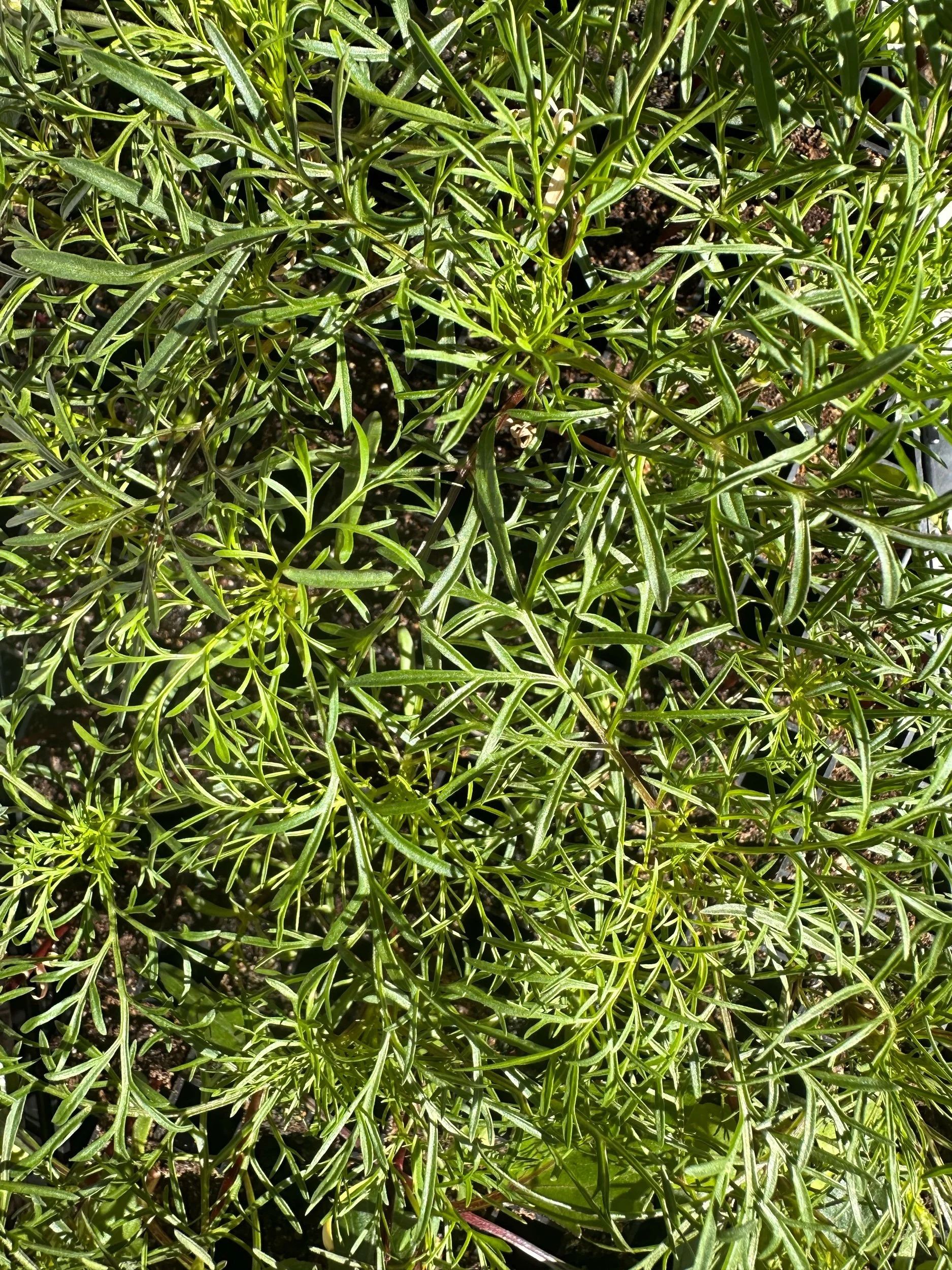
Apricot-rose blooms on long stems.
Tall, vigorous, densely branching plants. Delicate single blooms have a slightly ruffled edge and glow in shades of blush, apricot, and rose. We have observed variation in bloom color: some flowers are lighter in color, while some express more rose than apricot. The 2 1/2–3" blooms are not as full or uniform as we would like. Still, we appreciate the variety for its productive plants and its ability to unify warm and cool hues in arrangements.
Specs:
Plant Height: 36–48"
2.5” pot
LIGHT PREFERENCE:
Sun.
PLANT HEIGHT:
Varies. Tall varieties may benefit from some wind protection, such as Hortonova, used as horizontal support.
PLANT SPACING:
9-12". Wider spacing creates stronger, thicker stems.
HARDINESS ZONES:
Annual.
HARVEST:
Petals just opening, but not yet flattened. Deadheading is required to have blooms all summer.
SOIL REQUIREMENTS:
Any soil.
USES:
Excellent cut flowers. Beds, containers, and mass plantings.
SEED SOURCE:
*Item description and growing information sourced from the seed company and linked accordingly
** if there are no images of the product it means that I have not grown that specific variety in the past. product images are available to review on the seed company’s website
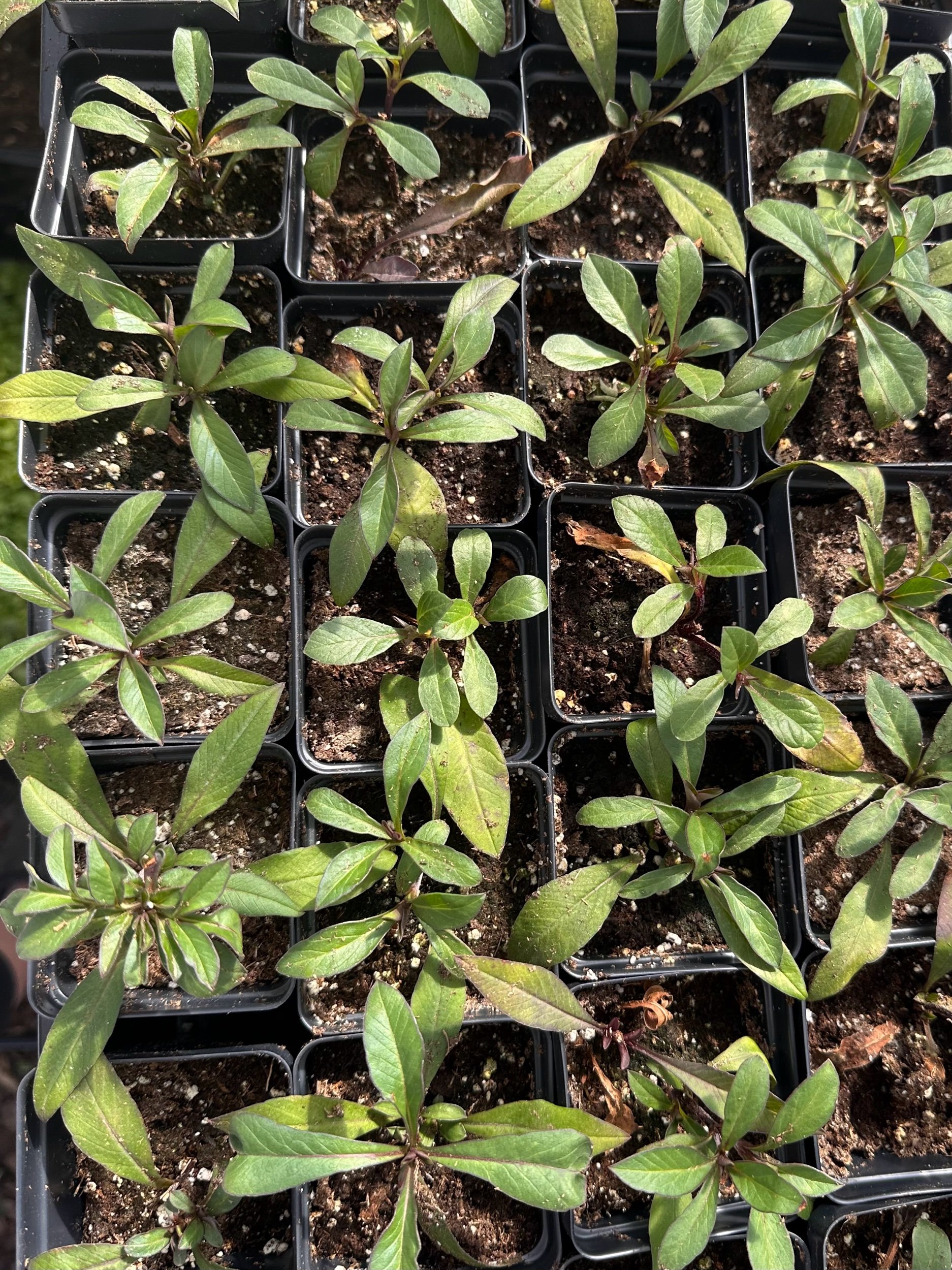
This little beauty is a big improvement over seed grown strains. It branches freely, and is more heat tolerant and mildew resistant than older cultivars. It is vegetatively propagated and patented so propagation is prohibited.
Some folks find them finicky while others have great success, and I don't know the exact combination of conditions that make them thrive.
Plugs sourced from Gro ‘n Sell/Farmer Bailey and then lovingly grown to have a larger root ball filling a 2.5” pot.
Specs:
2.5” pot
Common Name
Cosmos, garden cosmos, Mexican asters
Genus
Cosmos
Species C. bipinnatus
Family
Asteraceae
Life Cycle
Tender Annual
Netting / Staking
One or two layers of netting is beneficial in areas with high wind.
Temperature RangePlants can not tolerate freezing at any point in the growth cycle. They can handle the heat of summertime and are a crop suitable for most zones.
Spacing
9-12"
Soil Preference
Loose, well draining soil with low fertility. Too much nutrient content will cause heavy foliar growth and few flowers.
Day Length
Short day plants - flowering is triggered as days get shorter, typically towards the end of summer. If stressed rootbound or drought conditions) they will flower prematurely. If growing in a greenhouse through the winter, additional lighting will be required to mimic long days for the vegetative state.
Pinching
Pinch once when the plants are about 6" high, down to a few sets of leaves to encourage side branching. If the plants try to flower prematurely, continue to pinch off buds and flowers until you start seeing longer stems.
Harvesting
Expect flowers approximately 45-60 days after planting plugs (dependent on weather and temperature). Harvest when flowers are just starting to open for the longest vase life. Mature side buds will also open in the vase. Cut deeply into the plant for long stems and to promote additional side branching. If flowers are left to open fully they will get pollinated and vase life will suffer.
Post Harvest Care
Place cut stems immediately into cool water. Floral preservative will extend vase life - expect stems to last just shy of one week. Can be stored in the cooler for a short period of time.
Diseases / Insects
During long stretches of heat and humidity powdery mildew and bacterial wilt may be seen.
Common insect pests include aphids, thrips and Japanese beetles.
Bailey's Notes
Do not allow plants to set seed - keep up with harvesting and deadheading or the plant will start to shut down.
Some growers will use stems of cosmos foliage as a filler in bouquets - they have reported a good vase life although we don't have personal experience to support this claim.
PLUG SOURCE:
*Item description and growing information sourced from the seed company and linked accordingly
** if there are no images of the product it means that I have not grown that specific variety in the past. product images are available to review on the seed company’s website
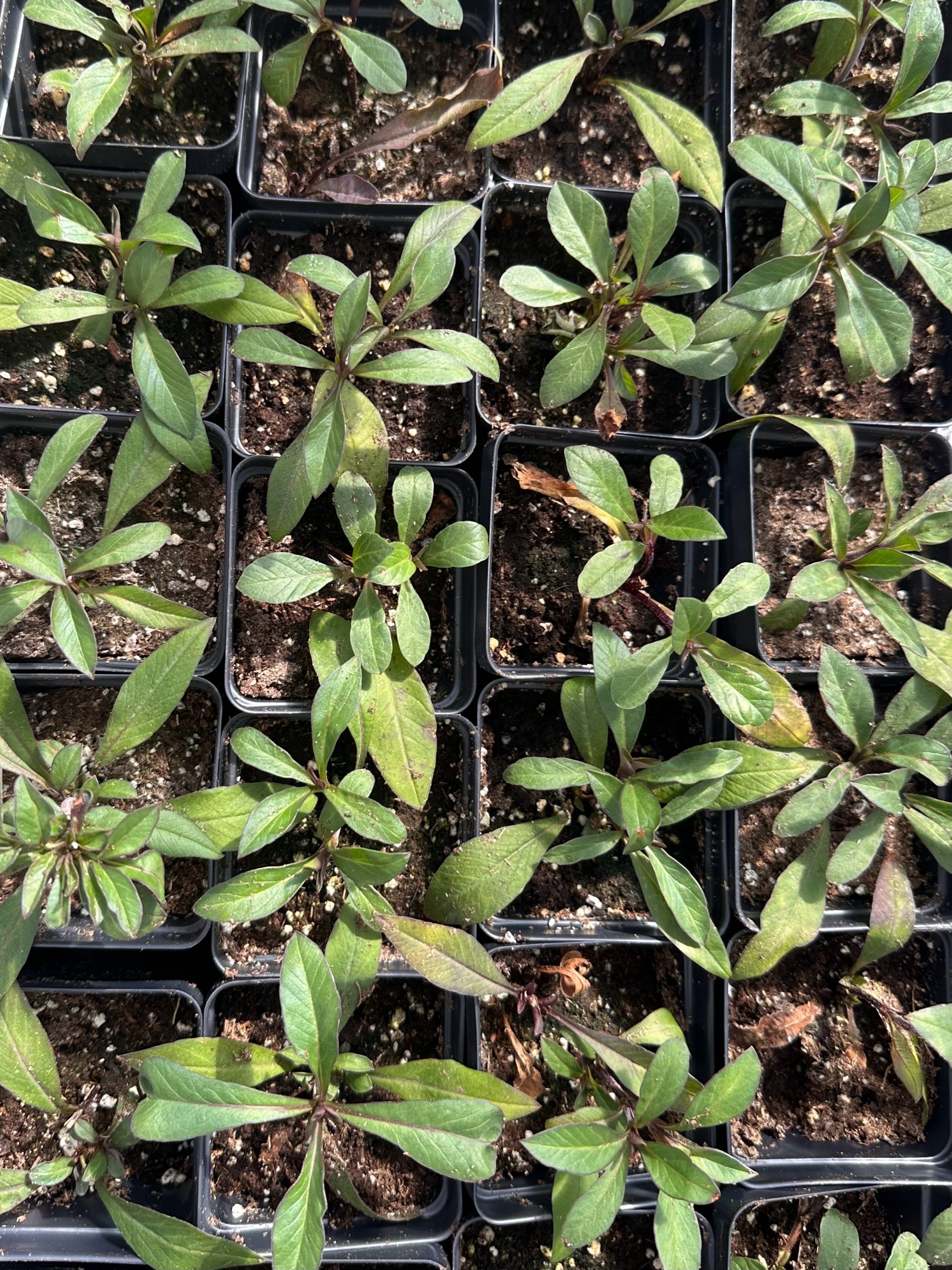
This little beauty is a big improvement over seed grown strains. It branches freely, and is more heat tolerant and mildew resistant than older cultivars. It is vegetatively propagated and patented so propagation is prohibited.
Some folks find them finicky while others have great success, and I don't know the exact combination of conditions that make them thrive.
Plugs sourced from Farmer Bailey/Grow ‘n Sell and then lovingly grown to have a larger root ball filling a 2.5” pot.
Specs:
2.5” pot
Common Name
Cosmos, garden cosmos, Mexican asters
Genus
Cosmos
Species
C. bipinnatus
Family
Asteraceae
Life Cycle
Tender Annual
Netting / Staking
One or two layers of netting is beneficial in areas with high wind.
Temperature Range
Plants can not tolerate freezing at any point in the growth cycle. They can handle the heat of summertime and are a crop suitable for most zones.
Spacing
9-12"
Soil Preference
Loose, well draining soil with low fertility. Too much nutrient content will cause heavy foliar growth and few flowers.
Day Length
Short day plants - flowering is triggered as days get shorter, typically towards the end of summer. If stressed rootbound or drought conditions) they will flower prematurely. If growing in a greenhouse through the winter, additional lighting will be required to mimic long days for the vegetative state.
Pinching
Pinch once when the plants are about 6" high, down to a few sets of leaves to encourage side branching. If the plants try to flower prematurely, continue to pinch off buds and flowers until you start seeing longer stems.
Harvesting
Expect flowers approximately 45-60 days after planting plugs (dependent on weather and temperature). Harvest when flowers are just starting to open for the longest vase life. Mature side buds will also open in the vase. Cut deeply into the plant for long stems and to promote additional side branching. If flowers are left to open fully they will get pollinated and vase life will suffer.
Post Harvest Care
Place cut stems immediately into cool water. Floral preservative will extend vase life - expect stems to last just shy of one week. Can be stored in the cooler for a short period of time.
Diseases / Insects
During long stretches of heat and humidity powdery mildew and bacterial wilt may be seen.
Common insect pests include aphids, thrips and Japanese beetles.
Bailey's Notes
Do not allow plants to set seed - keep up with harvesting and deadheading or the plant will start to shut down.
Some growers will use stems of cosmos foliage as a filler in bouquets - they have reported a good vase life although we don't have personal experience to support this claim.
PLUG SOURCE:
*Item description and growing information sourced from the seed company and linked accordingly
** if there are no images of the product it means that I have not grown that specific variety in the past. product images are available to review on the seed company’s website
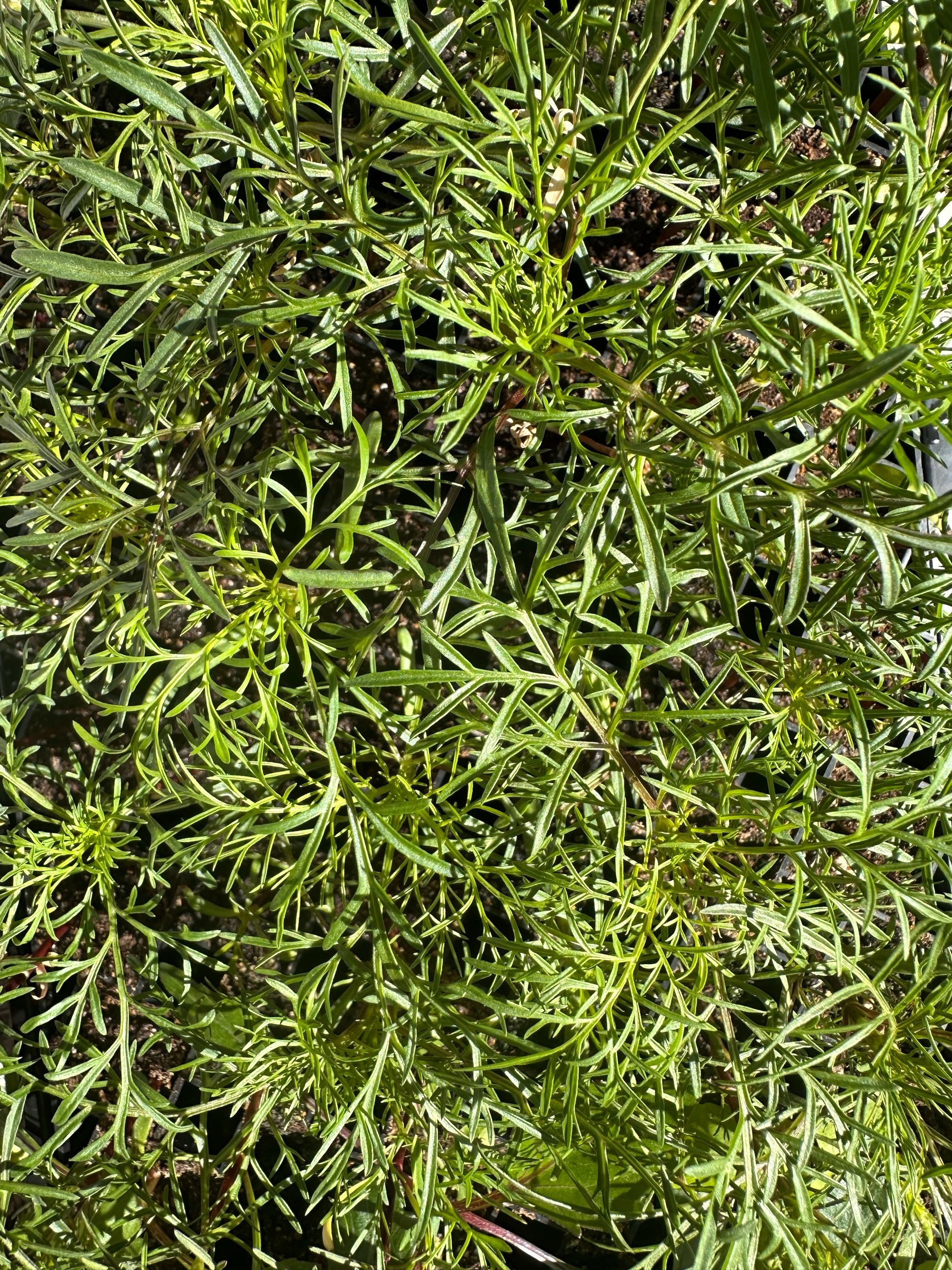
(Cosmos bipinnatus). Here's something unusual for cottage gardens or for cut flowers: the ray flowers of this charming cosmos are tubular or cone-shaped rather than flat, giving the blooms an intricate look. Three-inch flowers are produced abundantly all summer until frost, in the usual cosmos shades of deep rose, shell pink, and pure, snowy white. Plants reach 3-4 feet; like most cosmos, it tolerates poor and dry soils, hot conditions.
Annual
60-90 days to maturity
6-8 hours of full sun
Plant Spacing: 10"
Ideal Temperature: 70-75 F
Frost Hardy: No
Plant Height: 36–48"
2.5” pot
Sea Shells cosmos is a unique heirloom variety that reaches 3-4 feet. Like most cosmos, it tolerates poor and dry soils, as well as hot conditions. Regular deadheading encourages more blooms. Avoid excessive fertilization, as that can lead to the growth of foliage at the expense of flowers.
How to Grow
Sea Shells cosmos thrives in poor to average soil, as rich soil can lead to excessive foliage with fewer blooms. Water moderately, allowing the soil to dry between waterings to prevent weak, leggy growth. In windy areas, taller plants may need staking to prevent them from falling over. To keep the flowers blooming all season, remove spent blooms regularly. Cosmos tolerate heat and drought well, making them an excellent choice for low-maintenance summer gardens.
How to Save
Cosmos are insect pollinated, and there may be some crossing between varieties in the garden. You can enjoy the mixing or use caging techniques and hand pollination to avoid crossing.
Saving seeds from cosmos is easy: simply allow the heads to brown and dry on plants and collect seeds. Store in a cool, dry, dark place over winter.
SEED SOURCE:
*Item description and growing information sourced from the seed company and linked accordingly
** if there are no images of the product it means that I have not grown that specific variety in the past. product images are available to review on the seed company’s website
Unique, long-lasting textural accent.
1" globes on long, stiff stems are easy to harvest and use as cut flowers. Grass-like, silvery green foliage. As a cut flower, it has a long vase life and as a dried flower, it retains its color. Tolerates heat. Craspedia is also known as drumsticks. Tender perennial in Zones 8–11.
Specs:
Plant Height: 24-30"
2” soil block
LIGHT PREFERENCE:
Sun.
PLANT HEIGHT:
24-30". Support may be needed to ensure straight stems.
PLANT SPACING:
9-12".
HARDINESS ZONES:
Zones 8-11.
HARVEST:
Fresh or dried: When flower heads are fully open and uniformly golden. Hang to dry.
SOIL REQUIREMENTS:
Average soil with good drainage.
USES:
Excellent cut and dried flower. Beds, borders, and mass plantings.
SCIENTIFIC NAME:
Craspedia globosa
SEED SOURCE:
*Item description and growing information sourced from the seed company and linked accordingly
** if there are no images of the product it means that I have not grown that specific variety in the past. product images are available to review on the seed company’s website
(Trachymene caerulea) A distinctly sweet-scented sky blue umbel showcasing a profusion of delicate, lavender-blue, tiny star-shaped flowers. Graceful 24-36” tall, branching plants are ideal for cutting, lasting at least a week in a vase and blooming June through Sept (October if it has not frosted yet) in the field. Do make sure to cut in the cool part of the day. We grew these for market bouquets years ago, loved them then and are happy to bring them back into the fold and to you.
Specs:
2” soil block
LIGHT PREFERENCE:
Sun/Part Shade.
PLANT HEIGHT:
Varies. Providing support is optional.
PLANT SPACING:
12” in rows 15” apart
HARDINESS ZONES:
Annual.
VASE LIFE:
7.
HARVEST:
Cut long stems/branches when flower is 1/2 open and expect a stem life of 7 days.
SOIL:
Well-drained soil.
USES:
Fresh or dried cut flower, back of bed, accent in borders.
NOTES:
Support advised.
SEED SOURCE:
*Item description and growing information sourced from the seed company and linked accordingly
** if there are no images of the product it means that I have not grown that specific variety in the past. product images are available to review on the seed company’s website
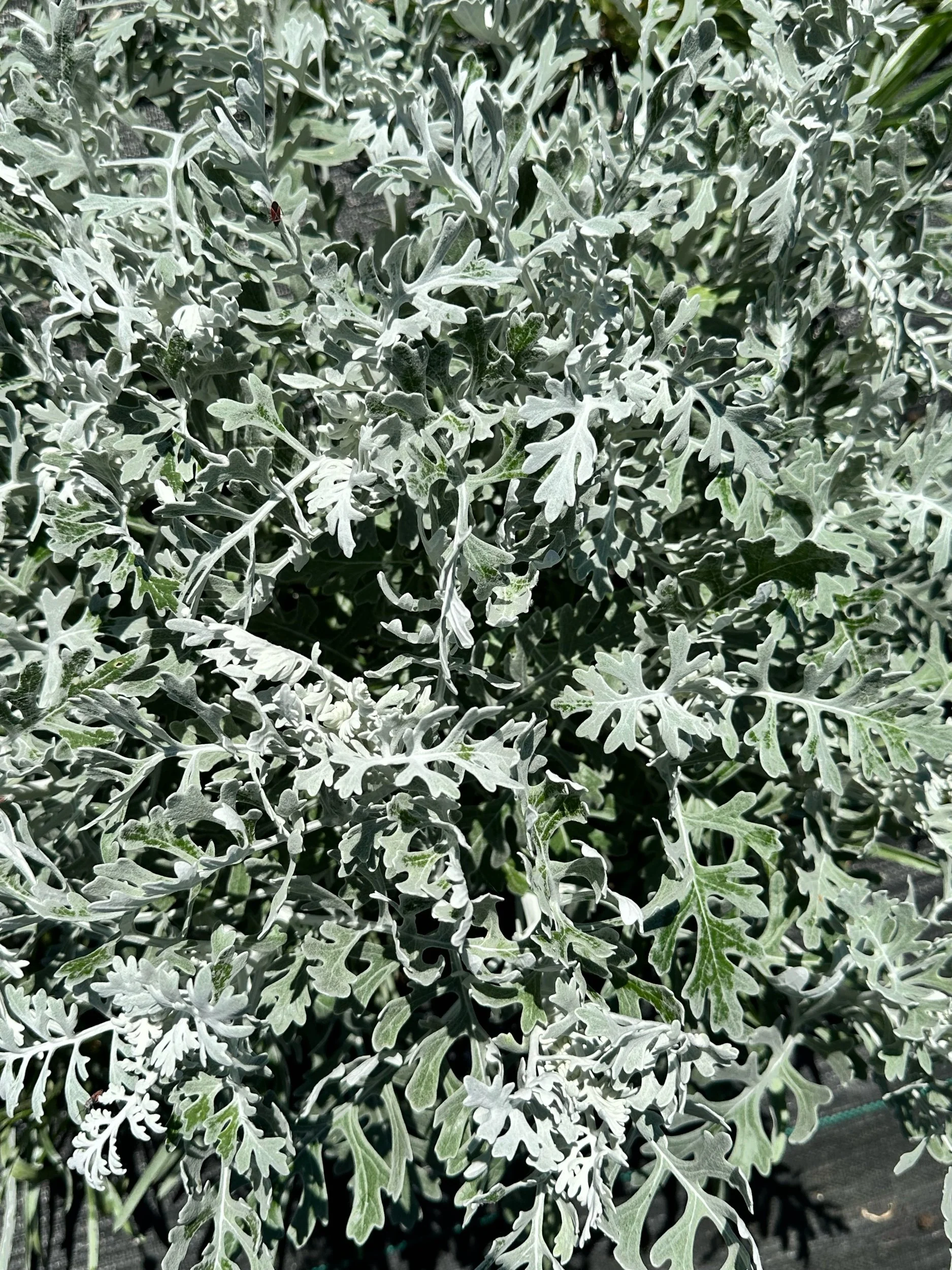
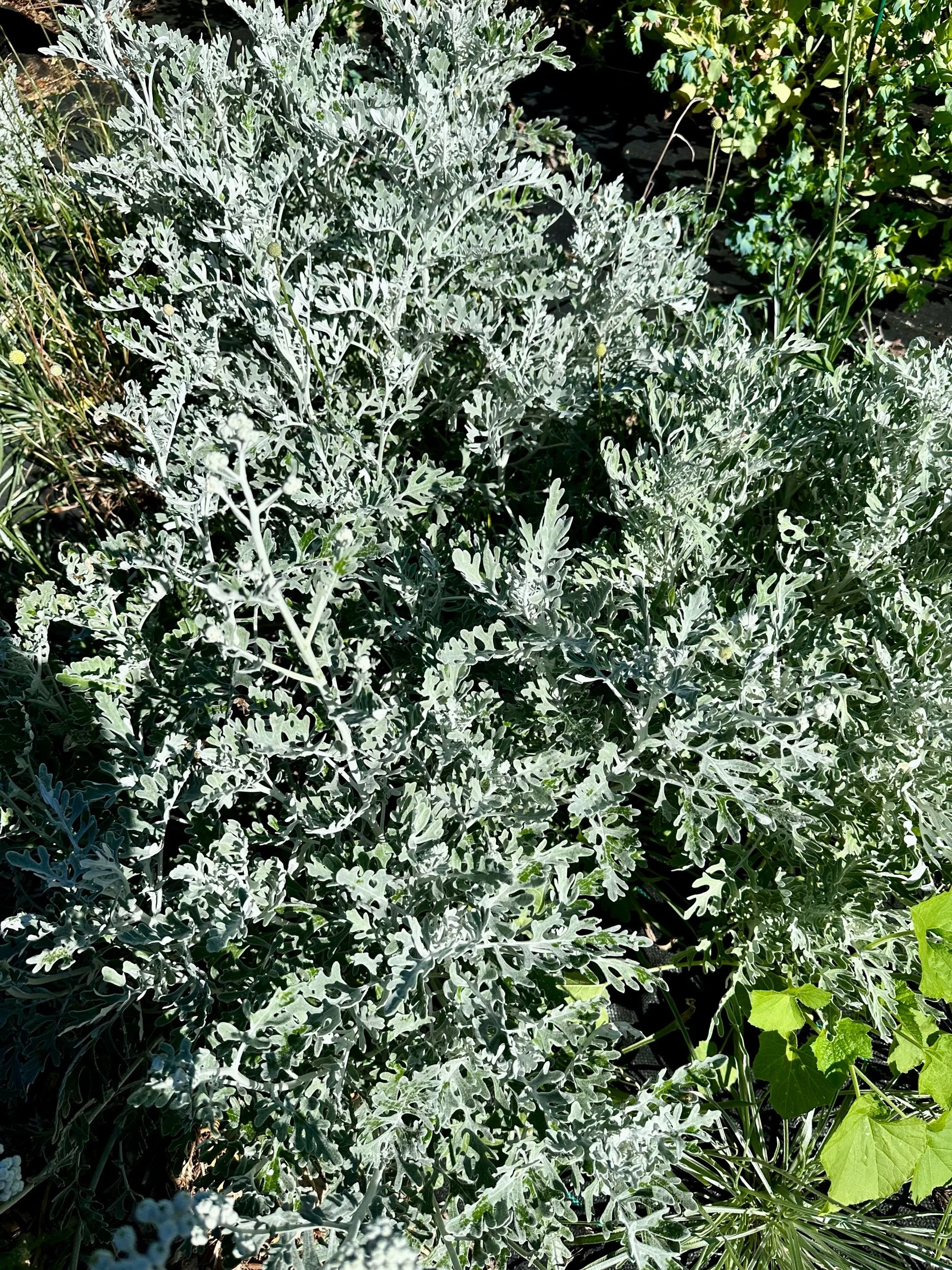
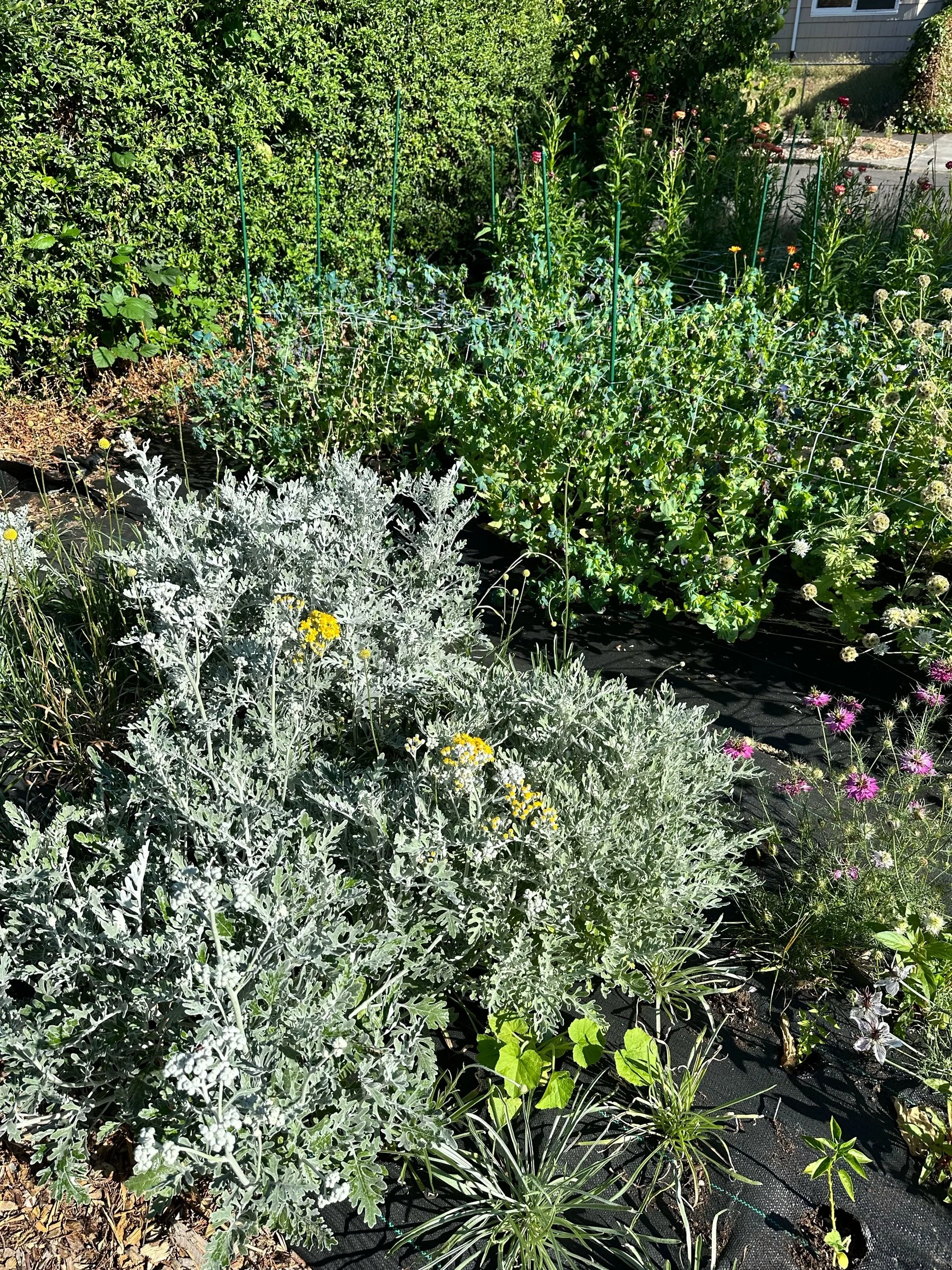
Tallest dusty miller for cut foliage.
Candicans is taller and more productive than other dusty miller varieties in our trials, making it a good choice for cut-flower production. Compared to Silverdust, Candicans is taller, more vigorous, a bit more variable in plant architecture, and its leaves are not as deeply lobed. Otherwise, overall appearance is very similar. Dusty Miller's silvery foliage is a very popular cut-flower foliage for elegant bouquets. 3–7" long, velvety leaves with a snowflake appearance. Plants produce yellow flowers the second year from seeding, primarily in the southern states. Flowers are commonly removed to encourage foliage growth. Tender perennial in Zones 8–10.
Specs:
Plant Height: 16-24"
2” soil block
LIGHT PREFERENCE:
Sun.
SOIL REQUIREMENTS:
Average, well-drained soil.
PLANT SPACING:
9-12".
HARDINESS ZONES:
Tender perennial in Zones 8-10.
HARVEST:
Fresh or dried: Harvest stems at desired length. Hang to dry.
USES:
Excellent bedding plant, great for mixed containers, and fresh cut filler.
SCIENTIFIC NAME:
Senecio cineraria
SEED SOURCE:
*Item description and growing information sourced from the seed company and linked accordingly
** if there are no images of the product it means that I have not grown that specific variety in the past. product images are available to review on the seed company’s website
Classic florists' eucalyptus.
Very similar to Baby Blue. Robust plants produce column-like, sturdy stems packed with waxy, silvery blue leaves. Round, 2" leaves. Also known as silverleaf mountain gum, gum, and euc. Tender perennial in Zones 9–11.
Specs:
Plant Height: 36–48"
2” soil block
LIGHT PREFERENCE:
Sun.
PLANT HEIGHT:
Varies.
PLANT SPACING:
12-24".
HARDINESS ZONES:
Zones 9-11. Eucalyptus may be grown as a perennial in areas that receive no frost or with adequate protection from frost in cooler regions.
HARVEST:
After leaves start to feel leathery and stems are woody. Fresh cut stems can be hung to dry or preserved in a glycerin and water solution. Preserving with glycerin will result in more durable and pliable dried stems that have the appearance of freshly cut foliage.
SOIL REQUIREMENTS:
Well-drained, fertile soil.
USES:
Excellent cut or dried flower foliage. Accent in beds. Excellent container plants.
ALTERNATE NAMES:
Cider gum, gum, euc
SEED SOURCE:
*Item description and growing information sourced from the seed company and linked accordingly
** if there are no images of the product it means that I have not grown that specific variety in the past. product images are available to review on the seed company’s website
Large silvery blue-green leaves appear to be strung on the stem.
The most popular foliage for fresh, dried, or preserved use for large bunches and decorating. Also known as gum and euc. Tender perennial in Zones 9–11.
Specs:
Plant Height: 24–36"
2” soil block
LIGHT PREFERENCE:
Sun.
PLANT HEIGHT:
Varies.
PLANT SPACING:
12-24".
HARDINESS ZONES:
Zones 9-11. Eucalyptus may be grown as a perennial in areas that receive no frost or with adequate protection from frost in cooler regions.
HARVEST:
After leaves start to feel leathery and stems are woody. Fresh cut stems can be hung to dry or preserved in a glycerin and water solution. Preserving with glycerin will result in more durable and pliable dried stems that have the appearance of freshly cut foliage.
SOIL REQUIREMENTS:
Well-drained, fertile soil.
USES:
Excellent cut or dried flower foliage. Accent in beds. Excellent container plants.
ALTERNATE NAMES:
Cider gum, gum, euc
SEED SOURCE:
*Item description and growing information sourced from the seed company and linked accordingly
** if there are no images of the product it means that I have not grown that specific variety in the past. product images are available to review on the seed company’s website
Best variety for bouquets.
Small, silvery green leaves on well-branched stems are ideal for fresh or dried bouquets. Also known as cider gum, gum, and euc. Tender perennial in Zones 9–11.
Specs:
Plant Height: 24–36"
2” soil block
LIGHT PREFERENCE:
Sun.
PLANT HEIGHT:
Varies.
PLANT SPACING:
12-24".
HARDINESS ZONES:
Zones 9-11. Eucalyptus may be grown as a perennial in areas that receive no frost or with adequate protection from frost in cooler regions.
HARVEST:
After leaves start to feel leathery and stems are woody. Fresh cut stems can be hung to dry or preserved in a glycerin and water solution. Preserving with glycerin will result in more durable and pliable dried stems that have the appearance of freshly cut foliage.
SOIL REQUIREMENTS:
Well-drained, fertile soil.
USES:
Excellent cut or dried flower foliage. Accent in beds. Excellent container plants.
ALTERNATE NAMES:
Cider gum, gum, euc
SEED SOURCE:
*Item description and growing information sourced from the seed company and linked accordingly
** if there are no images of the product it means that I have not grown that specific variety in the past. product images are available to review on the seed company’s website
Vigorous plants with large leaves.
A favorite in our trials. Silvery green leaves shimmer on tall stems. Upright plants produce sturdy stems that are easy to strip and clean. Large round leaves alternate on reddish-green stems. Some variability in plant height—in our trials, plants ranged from 30–60" tall, with most reaching at least 48". Also known as 'Silver Dollar', gum, and euc. Tender perennial in Zones 9–11.
Specs:
Plant Height: varies
2” soil block
LIGHT PREFERENCE:
Sun.
PLANT HEIGHT:
Varies.
PLANT SPACING:
12-24".
HARDINESS ZONES:
Zones 9-11. Eucalyptus may be grown as a perennial in areas that receive no frost or with adequate protection from frost in cooler regions.
HARVEST:
After leaves start to feel leathery and stems are woody. Fresh cut stems can be hung to dry or preserved in a glycerin and water solution. Preserving with glycerin will result in more durable and pliable dried stems that have the appearance of freshly cut foliage.
SOIL REQUIREMENTS:
Well-drained, fertile soil.
USES:
Excellent cut or dried flower foliage. Accent in beds. Excellent container plants.
ALTERNATE NAMES:
Cider gum, gum, euc
SEED SOURCE:
*Item description and growing information sourced from the seed company and linked accordingly
** if there are no images of the product it means that I have not grown that specific variety in the past. product images are available to review on the seed company’s website
Airy, dark blue-green eucalyptus.
Shrub-like, compact habit in our annual trials, reaching 2–3' tall. Fine-leaf shape has a delicate appearance. Dark blue-green leaves contrast with red stems. Uniform plant habit.
Specs:
Plant Height: 20–36"
2” soil block
LIGHT PREFERENCE:
Sun.
PLANT HEIGHT:
Varies.
PLANT SPACING:
12-24".
HARDINESS ZONES:
Zones 9-11. Eucalyptus may be grown as a perennial in areas that receive no frost or with adequate protection from frost in cooler regions.
HARVEST:
After leaves start to feel leathery and stems are woody. Fresh cut stems can be hung to dry or preserved in a glycerin and water solution. Preserving with glycerin will result in more durable and pliable dried stems that have the appearance of freshly cut foliage.
SOIL REQUIREMENTS:
Well-drained, fertile soil.
USES:
Excellent cut or dried flower foliage. Accent in beds. Excellent container plants.
ALTERNATE NAMES:
Cider gum, gum, euc
SEED SOURCE:
*Item description and growing information sourced from the seed company and linked accordingly
** if there are no images of the product it means that I have not grown that specific variety in the past. product images are available to review on the seed company’s website
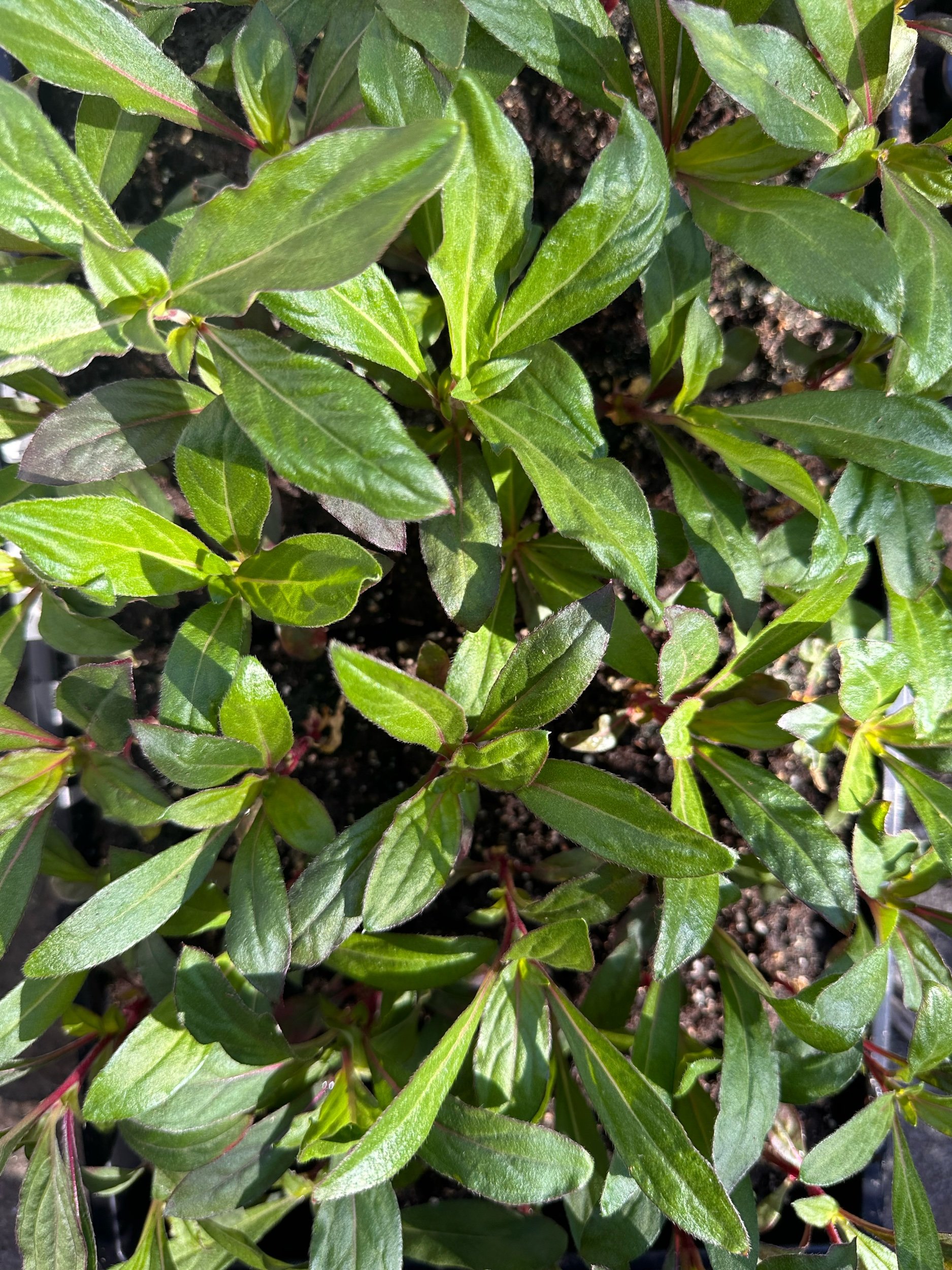
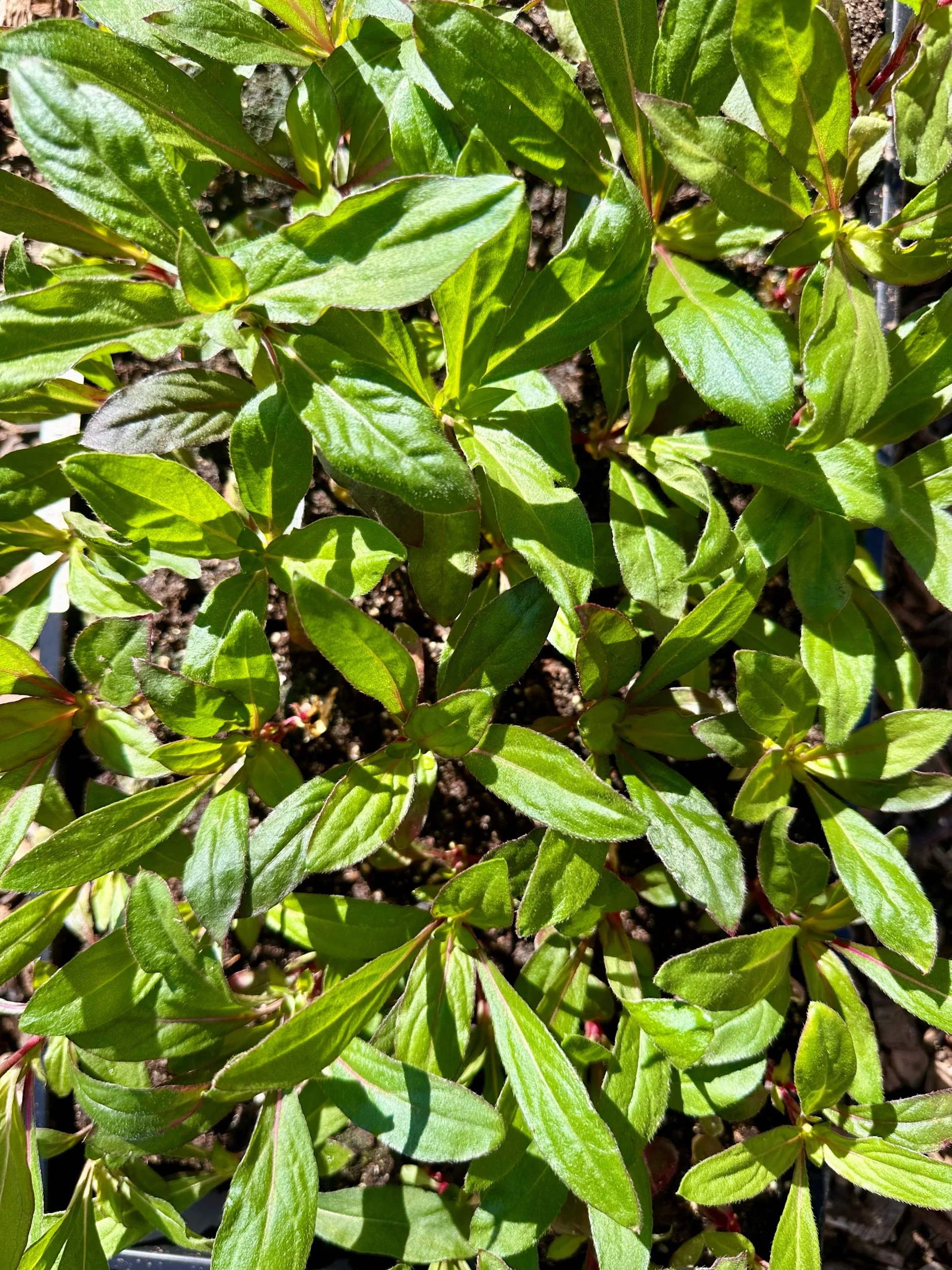
A reliable and profuse producer of everlasting flamingo pink globes. Plants reach 2 to 3 feet tall and are very low maintenance, and they are perfect for tidy borders, low water gardens, containers, and the cut flower patch. This long-season bloomer provides color for months and it makes a fantastic, vibrant dried flower. The little pink heads make an amazing pink tea popular in Asia.
Specs:
Plant Height: 18–28"
2” soil block
LIGHT PREFERENCE:
Sun.
PLANT HEIGHT:
18-28".
PLANT SPACING:
6-12". No pinching or support is necessary.
HARDINESS ZONES:
Annual.
HARVEST:
Fresh: Harvest when flowers are in color but before fully open. Dried: Harvest when flowers are completely open; hang to dry.
SOIL REQUIREMENTS:
Any soil with good drainage.
USES:
Cut flower or bedding plant.
SCIENTIFIC NAME:
Gomphrena spp.
SEED SOURCE:
*Item description and growing information sourced from the seed company and linked accordingly
** if there are no images of the product in bloom it means that I have not grown that specific variety in the past (or gotten a decent photo). product images are available to review on the seed company’s website
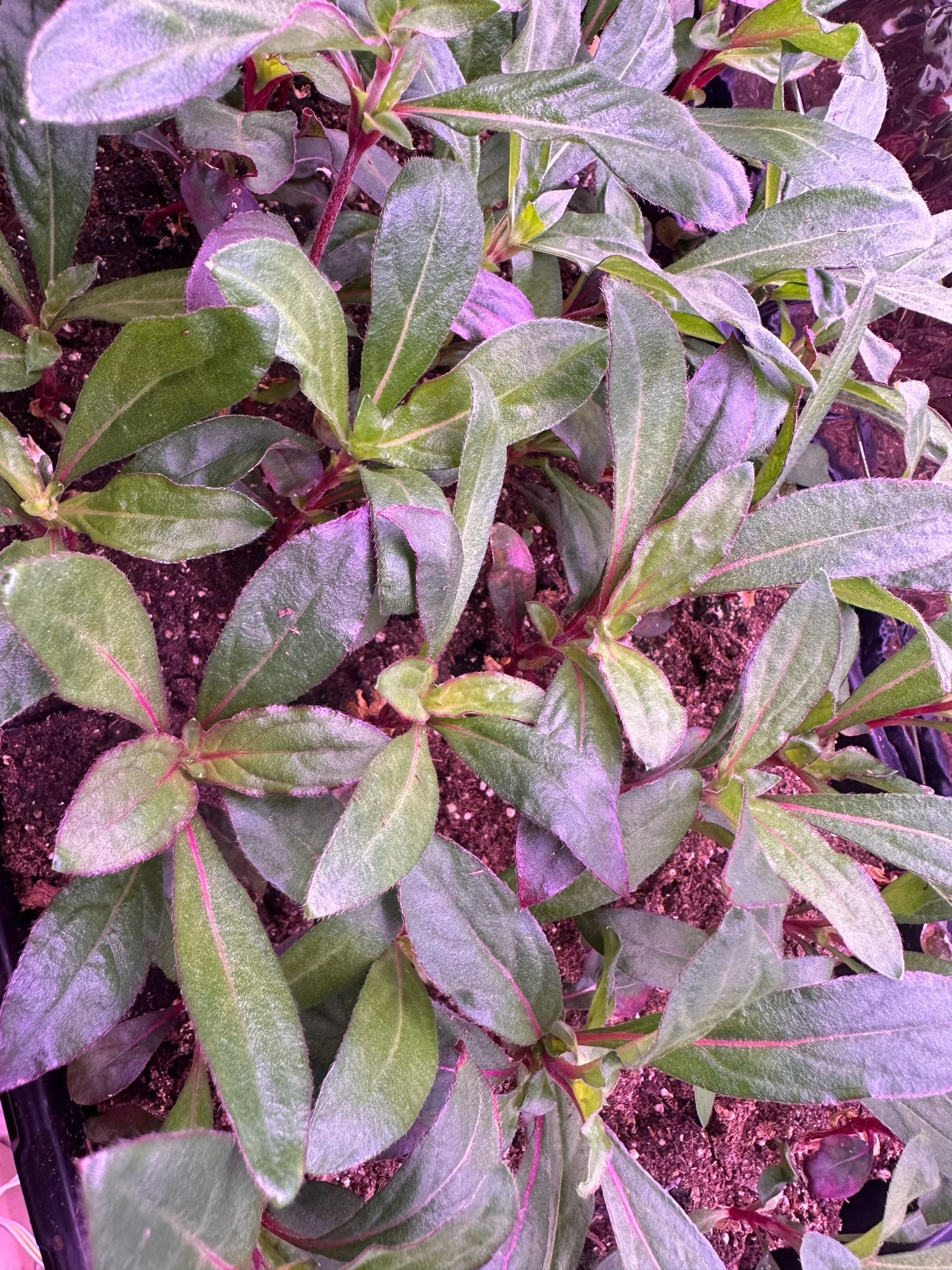
Rose bracts surround a creamy, glowing center—creating a luminous, dusky-rose bloom. Opalescent color shifts in the petals make us think of sparkling sequins. When comparing the bloom colors of Sequin (G. haageana) and Raspberry Cream (G. globosa), Sequin's flower color is lighter and warmer. Sequin's uniform plant is consistent with other G. haageana types: open plants branch from the base and contain few leaves; stems are tall and slender; and blooms are 1 1/2" in diameter. A perfect accent flower for tying together cool or warm color palettes. As a dried flower, Sequin's color holds well; petals lighten only slightly, and the bloom center deepens into light rose. PVP pending.
Specs:
Plant Height: 18–28"
2” soil block
LIGHT PREFERENCE:
Sun.
PLANT HEIGHT:
18-28".
PLANT SPACING:
6-12". No pinching or support is necessary.
HARDINESS ZONES:
Annual.
HARVEST:
Fresh: Harvest when flowers are in color but before fully open. Dried: Harvest when flowers are completely open; hang to dry.
SOIL REQUIREMENTS:
Any soil with good drainage.
USES:
Cut flower or bedding plant.
SCIENTIFIC NAME:
Gomphrena spp.
SEED SOURCE:
*Item description and growing information sourced from the seed company and linked accordingly
** if there are no images of the product in bloom it means that I have not grown that specific variety in the past (or gotten a decent photo). product images are available to review on the seed company’s website
Showy is an understatement when it comes to these bright globes of the summer garden. Not only do they sport bold colors, they add unique texture with their papery blooms. The more you cut, the more they bloom. This colorful blend becomes even more vibrant when pollinators discover it! Flowers last up to 2 weeks in the vase and are perfect for drying. Also known as globe amaranth, the tough plants don't flinch at hot, humid weather or even drought.
Specs:
Plant Height: 18–28"
2” soil block
LIGHT PREFERENCE:
Sun.
PLANT HEIGHT:
18-28".
PLANT SPACING:
6-12". No pinching or support is necessary.
HARDINESS ZONES:
Annual.
HARVEST:
Fresh: Harvest when flowers are in color but before fully open. Dried: Harvest when flowers are completely open; hang to dry.
SOIL REQUIREMENTS:
Any soil with good drainage.
USES:
Cut flower or bedding plant.
SCIENTIFIC NAME:
Gomphrena spp.
SEED SOURCE:
*Item description and growing information sourced from the seed company and linked accordingly
** if there are no images of the product in bloom it means that I have not grown that specific variety in the past (or gotten a decent photo). product images are available to review on the seed company’s website
Elegant fresh or dried flower.
Masses of white, woolly, nodding, 6" plumes on graceful plants forming 12" clumps. Showy accent in any landscape. Tender perennial in Zones 9–10, but grow as hardy annual.
Specs:
Plant Height: 12–24"
2” soil block
LIGHT PREFERENCE:
Sun.
PLANT HEIGHT:
20-28".
PLANT SPACING:
9-12".
HARDINESS ZONES:
Zones 9-10.
HARVEST:
Fresh cut or dried – Harvest just before seed heads shed pollen and are still light-green in color. Seed heads harvested once they have shed pollen tend to shatter.
SOIL REQUIREMENTS:
Average to light, porous soil.
USES:
Excellent fresh cut flower. May be dried. Charming naturalistic or mixed grass plantings. Effective planted in masses, tubs, and containers.
SCIENTIFIC NAME:
Lagurus ovatus
ALTERNATE NAMES:
Bunny tail grass, rabbit tail grass
SEED SOURCE:
*Item description and growing information sourced from the seed company and linked accordingly
** if there are no images of the product it means that I have not grown that specific variety in the past (or taken a good pic). product images are available to review on the seed company’s website
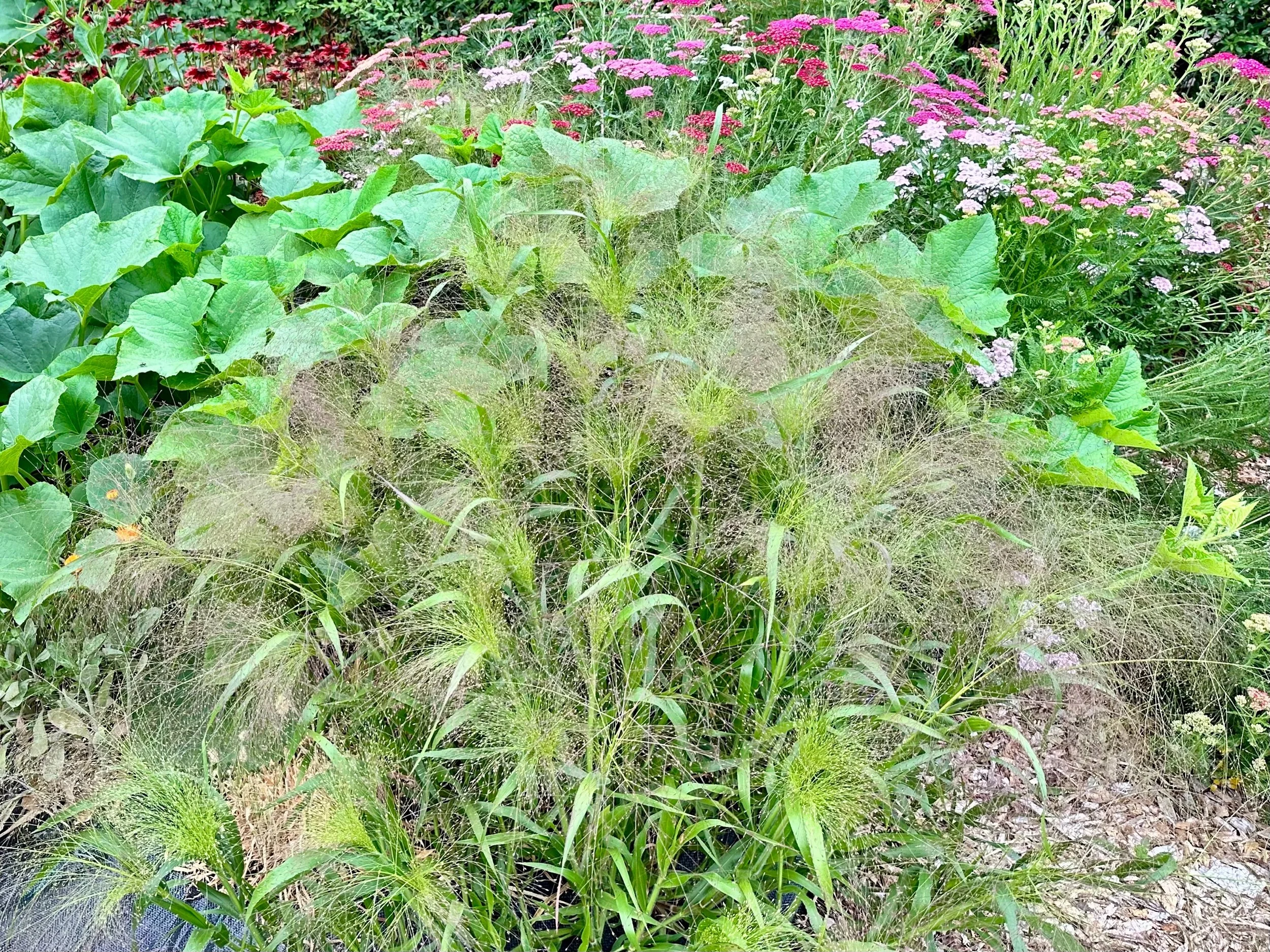
Airy cut-flower filler.
The airy flower plumes add sparkle to bouquets and landscapes. A productive filler for bouquets, and a carefree bedding plant. For cut-flower production, keep harvested for second and subsequent flushes of stems.
Specs:
Plant Height: 24–32"
2” soil block
LIGHT PREFERENCE:
Sun.
PLANT HEIGHT:
24-32".
PLANT SPACING:
10-12".
HARDINESS ZONES:
Annual.
HARVEST:
When flower spikes are fully opened.
SOIL REQUIREMENTS:
Well-drained soil.
USES:
Excellent cut flower. Filler or textural element in bouquets and mixed containers.
SCIENTIFIC NAME:
Panicum elegans
SEED SOURCE:
*Item description and growing information sourced from the seed company and linked accordingly
** if there are no images of the product it means that I have not grown that specific variety in the past (or taken a good pic). product images are available to review on the seed company’s website
Soft, furry plumes are perfect for drying.
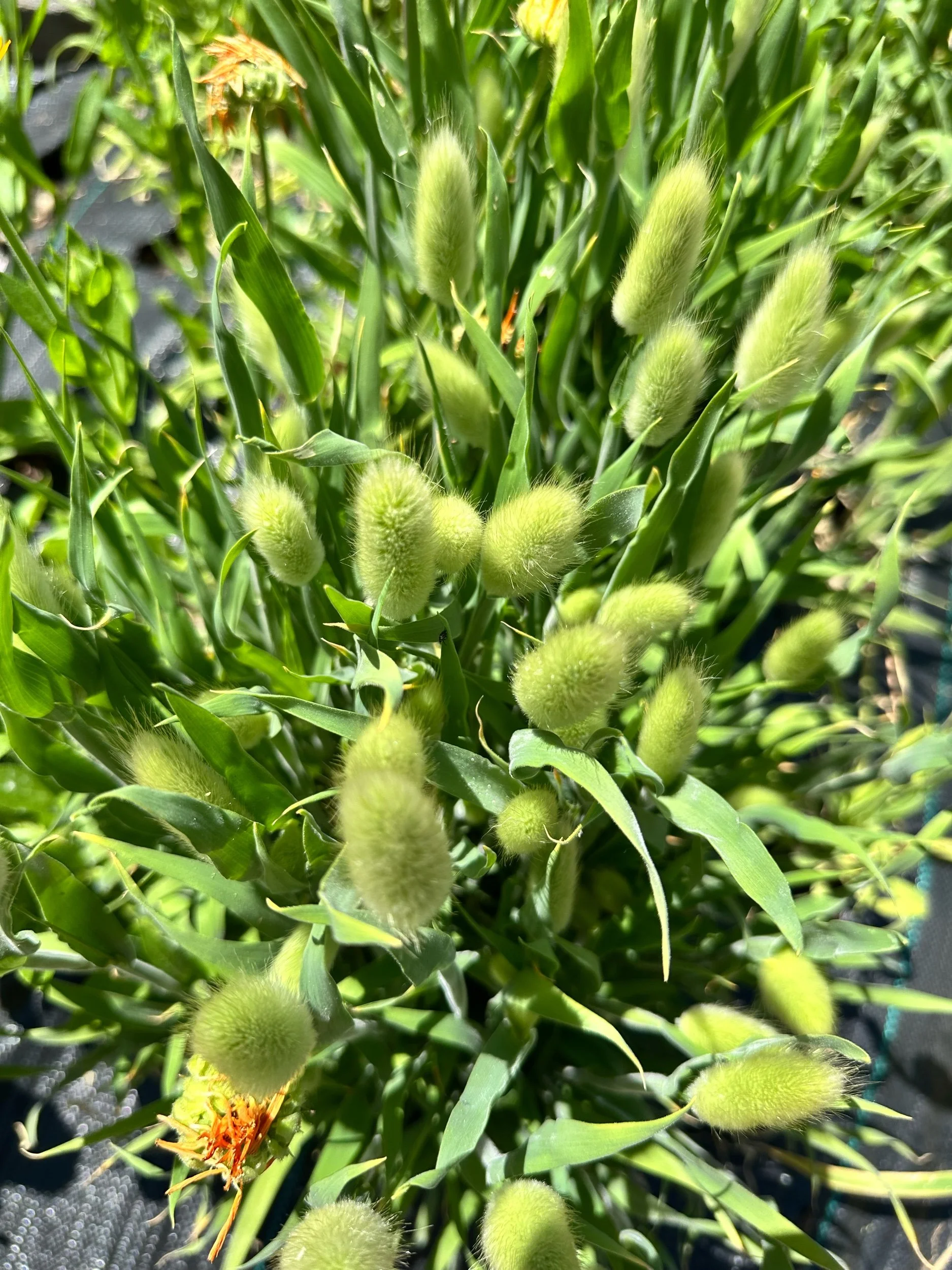
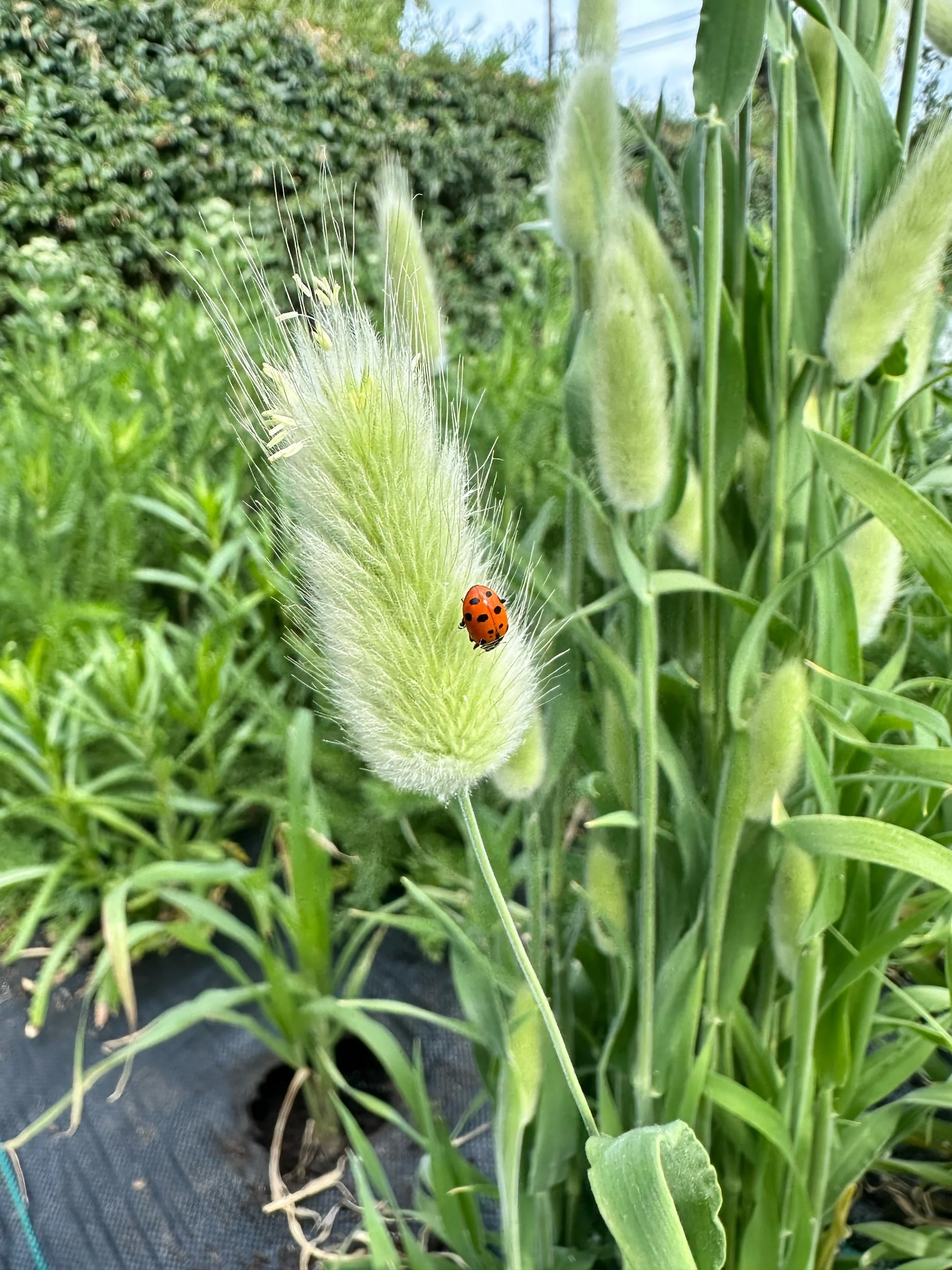
Charming, annual ornamental grass grown for its fuzzy, "bunny tail" blooms. 1 1/2–2" long oval, woolly blooms resemble a rabbit's tail. Flowers sit well above a clump of compact, light green grass. Very easy to dry. Holds well when dried; accepts dye readily. Developing flower heads are light green, maturing creamy white to soft wheat in color. Also known as bunny tail grass and rabbit tail grass.
Specs:
Plant Height: 12–24"
2” soil block
LIGHT PREFERENCE:
Sun.
PLANT HEIGHT:
20-28".
PLANT SPACING:
9-12".
HARDINESS ZONES:
Zones 8-10.
HARVEST:
Fresh cut or dried – Harvest just before seed heads shed pollen and are still light-green in color. Seed heads harvested once they have shed pollen tend to shatter.
SOIL REQUIREMENTS:
Average to light, porous soil.
USES:
Excellent fresh cut flower. May be dried. Charming naturalistic or mixed grass plantings. Effective planted in masses, tubs, and containers.
SCIENTIFIC NAME:
Lagurus ovatus
ALTERNATE NAMES:
Bunny tail grass, rabbit tail grass
SEED SOURCE:
*Item description and growing information sourced from the seed company and linked accordingly
** if there are no images of the product it means that I have not grown that specific variety in the past (or taken a good pic). product images are available to review on the seed company’s website
(Talinum paniculatum). A garden superstar with a fun twist! This charming relative of purslane boasts succulent, spinach-like leaves that stay delicious even when the plant starts to flower—perfect for your next salad adventure. The plant’s seedpods come in a dazzling mix of colors—yellow, orange, red, brown, and grey; that look fantastic in dried arrangements or crafty projects. Growing 2 to 3 feet tall and spreading up to 3 feet wide, it’s a tough cookie that thrives in poor soil with minimal fuss. It even self-sows, so you’ll have a continuous splash of beauty in your garden.
Specs:
Plant Height: 24-36’
2” soil block
LIGHT PREFERENCE:
Sun.
PLANT HEIGHT:
varies
PLANT SPACING:
9-12".
HARDINESS ZONES:
Annual.
SOIL:
Well-drained soil
USES:
edible, foliage and filler
Harvesting/Vase Life
Harvest after flowers have dropped and seedpods appear. Expect a vase life of 7 days or more.
SEED SOURCE:
*Item description and growing information sourced from the seed company and linked accordingly
** if there are no images of the product it means that I have not grown that specific variety in the past. product images are available to review on the seed company’s website
Deep mahogany-red foliage for cutting and garden accent.
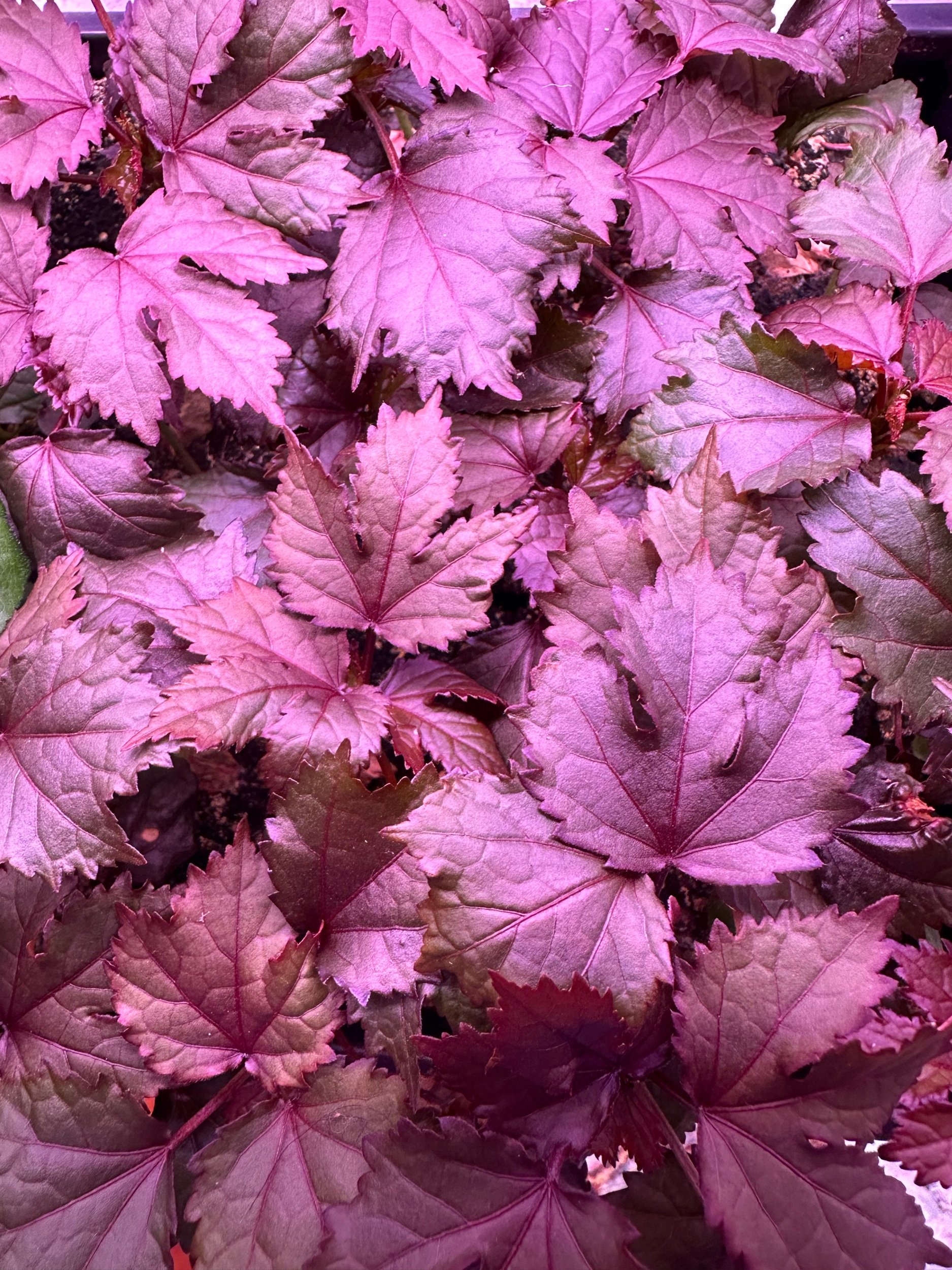
Decorative, deeply cut foliage with maple-leaf appearance, rich color, and sturdy branches. Ideal for late summer and fall arrangements. Primarily grown for use as cut flower foliage, the vigorous, drought- and heat-tolerant plants are also suitable for containers and landscaping. The abundant color and tall stature make Mahogany Splendor a lovely backdrop in the garden or patio. NOTE: If grown indoors or in part shade, foliage will be green to rust in color; the mahogany color develops fully in full sun. Also known as red-leaf hibiscus, false roselle, African rose mallow, and cranberry hibiscus. Tropical, herbaceous perennial in Zones 8a–9b. Tender perennial or annual in all other growing zones.
Specs:
Plant Height: 40–70"
LIGHT PREFERENCE:
Sun. Hibiscus thrives in heat and humidity so is best grown in full sun.
PLANT HEIGHT:
40-70".
PLANT SPACING:
24-36".
HARDINESS ZONES:
Zones 8-9.
STEM LENGTH:
12-70". Pinching is not required but if plants are pinched at a young stage, lateral branches will benefit greatly in length and quality.
HARVEST:
For cut foliage, harvest once leaves are mature (not tender) and the stems are straight, firm, and at least slightly woody.
SOIL REQUIREMENTS:
Well-drained but moist soil with high organic matter. Preferred pH of 5.8-6.5.
NOTE:
Foliage will have green/rust tones in the greenhouse, but mature to burgundy in full sun outdoors.
SCIENTIFIC NAME:
Hibiscus acetosella
ALTERNATE NAMES:
False Roselle, African Rose Mallow
SEED SOURCE:
*Item description and growing information sourced from the seed company and linked accordingly
** if there are no images of the product it means that I have not grown that specific variety in the past. product images are available to review on the seed company’s website
Mint flavor and aroma in abundance.
White flowers attract bees, beneficial wasps, butterflies and other beneficial insects. Needs staking in windy locations. Used in potpourri, incense and as an ingredient in tea and natural insect repellent formulas. Sturdy, mint-scented foliage and flowers make excellent and highly fragrant additions to bouquets.
Specs:
2” soil block
LIGHT PREFERENCE:
Sun.
PLANT HEIGHT:
24-30".
PLANT SPACING:
12".
HARDINESS ZONES:
Zones 5-8.
HARVEST:
Leaves may be harvested throughout the growing season. Gather flowering tops and leaves in late summer to dry for winter use. Leaves may be used for making teas and scenting potpourris. Flowers can be used in dried arrangements.
SCIENTIFIC NAME:
Pycnanthemum pilosum
SEED SOURCE:
*Item description and growing information sourced from the seed company and linked accordingly
** if there are no images of the product it means that I have not grown that specific variety in the past. product images are available to review on the seed company’s website
(Salvia nutans). A charming heirloom perennial. Native from eastern Europe to the Caucasus, Nodding Sage dazzles with its vibrant violet to soft pink blossoms, swaying gracefully in the breeze. Standing 2 to 3 feet tall, its tubular flowers hang delicately above aromatic, fuzzy foliage. Thriving in full sun to partial shade with well-drained soil, it attracts hummingbirds, butterflies, and bees all season long. Revered for its ease of growth and ecological benefits, this superstar brings a natural burst of color and cultural significance to any garden. With its wild, pollinator-friendly allure, it’s perfect for vibrant, effortless elegance.
2” soil block
SEED SOURCE:
*Item description and growing information sourced from the seed company and linked accordingly
** if there are no images of the product it means that I have not grown that specific variety in the past. product images are available to review on the seed company’s website
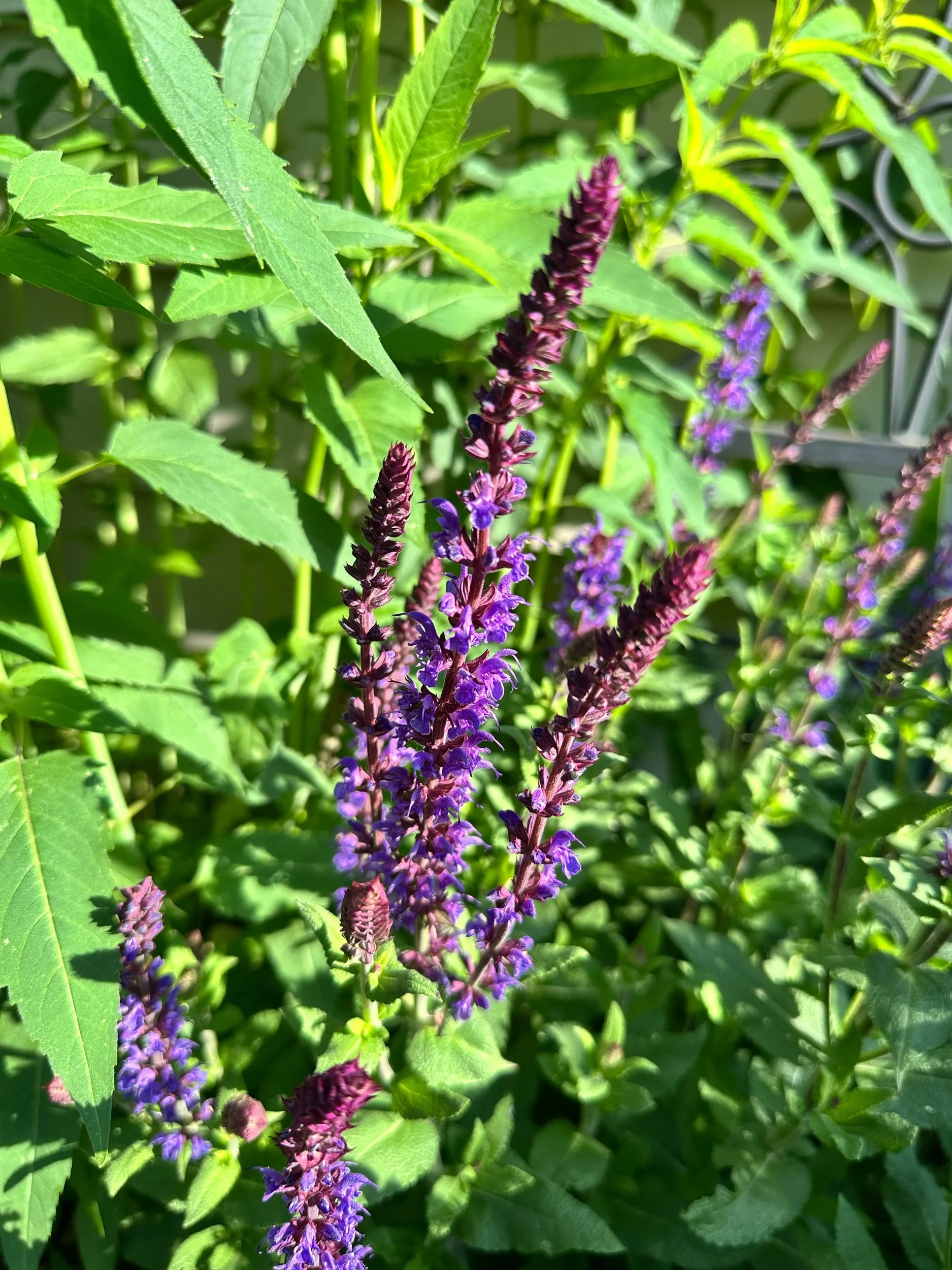
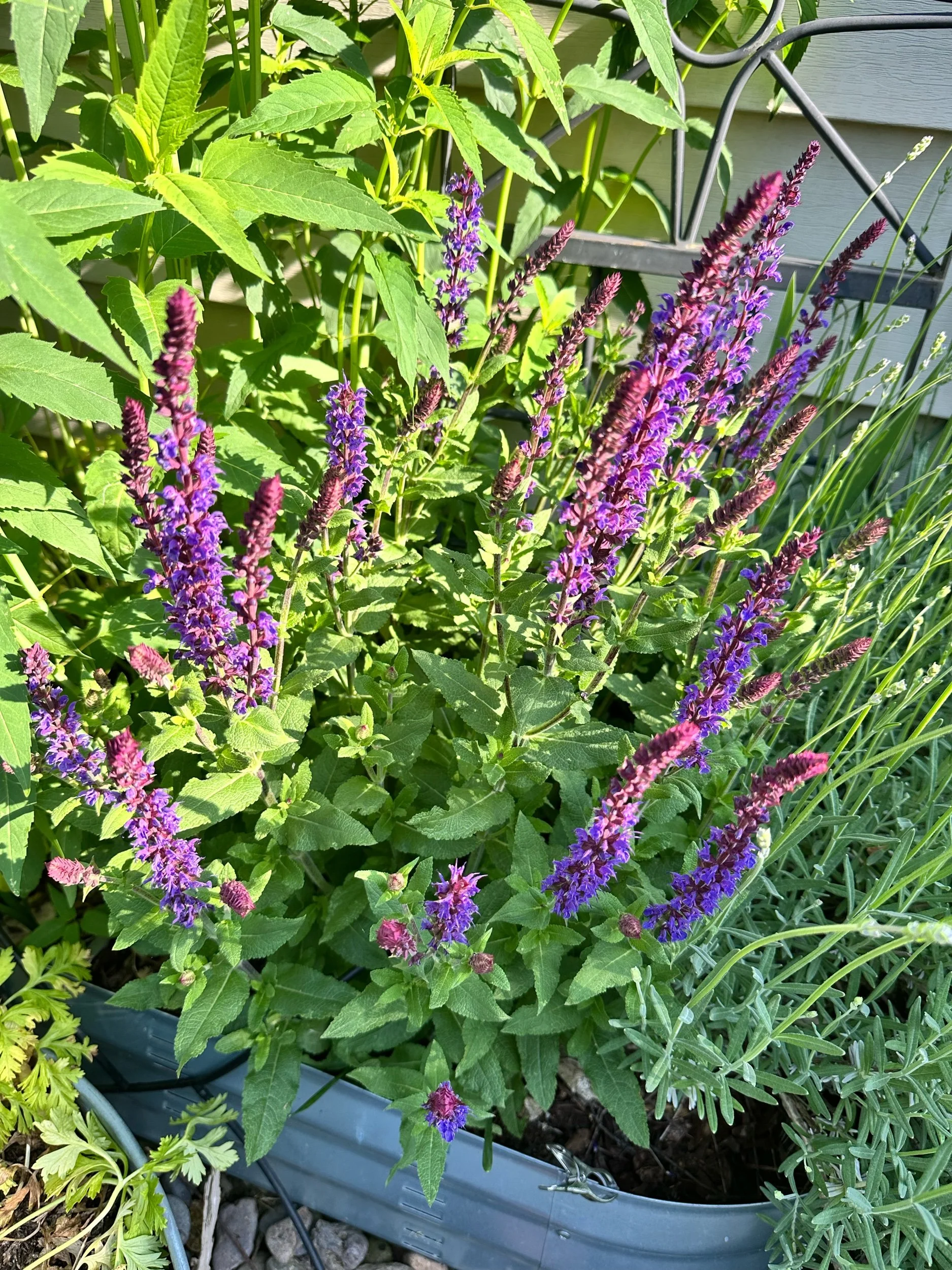
Cheerful blend of pollinator-friendly blooms. Rosy pink and violet spikes are aromatic and nectar rich; this mix is honeybee heaven! Perennial, easy to grow, bushy 2-foot tall plants fill in quickly, creating a mass of color from May until September. Tolerates poor soil and loves full sun.
8-12 hours of Sun
Sprouts in 10-30 Days
Ideal Temperature: 68-75 Degrees F
Seed Depth: 1/16"
Plant Spacing: 8"
Frost Hardy: Yes
Salvia nemorosa
2” soil block
SEED SOURCE:
*Item description and growing information sourced from the seed company and linked accordingly
** if there are no images of the product it means that I have not grown that specific variety in the past. product images are available to review on the seed company’s website
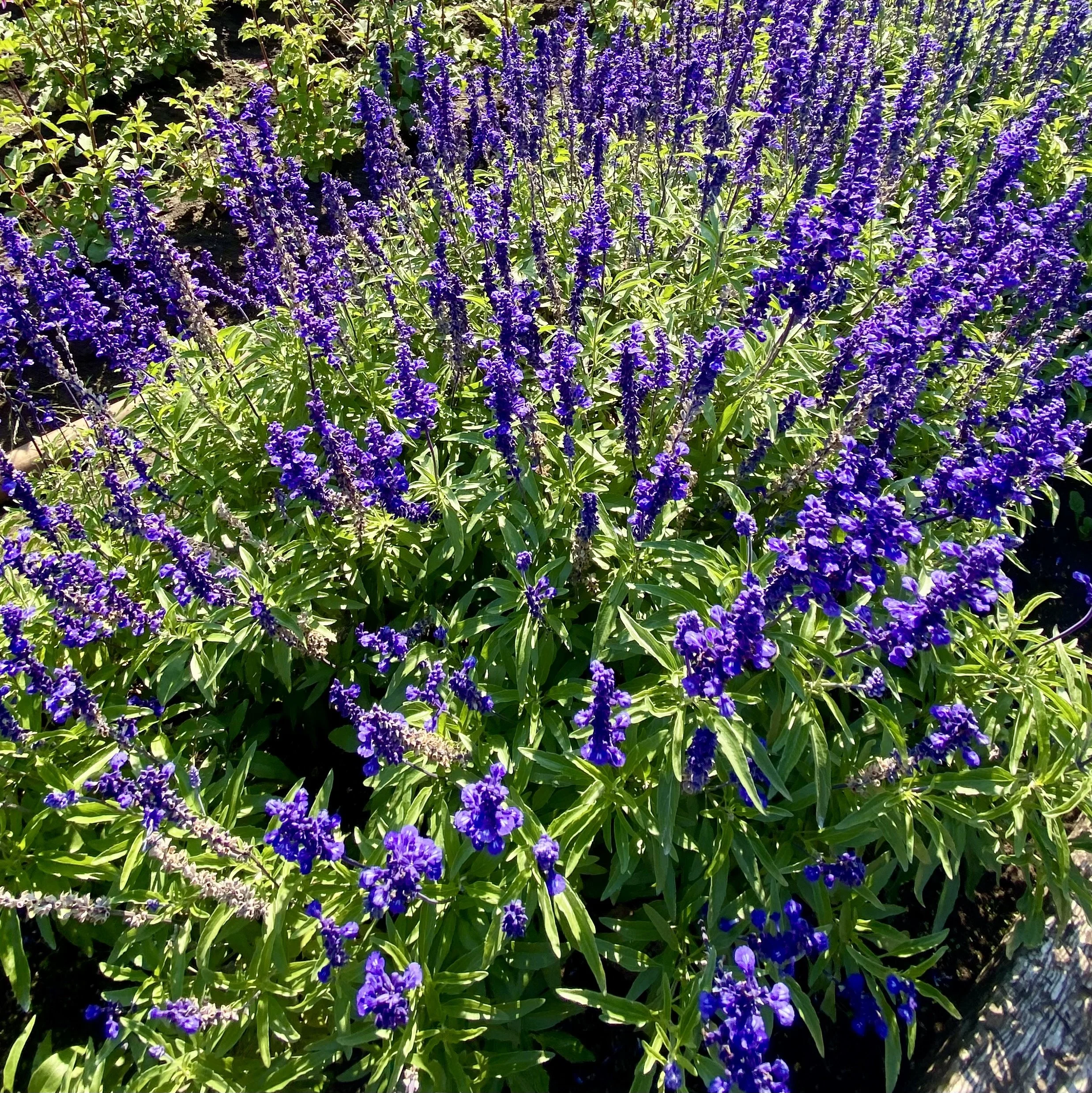
Dense 5–8", deep-blue spikes bloom summer to frost.
A bit shorter, a week later to flower, and a deeper blue than Gruppenblau. Uniform plants tolerate heat, humidity, and poor soils. Well-suited for mass plantings. Strong, thin stems are harvested fresh or dried when bottom 3–4 flowers open. Also known as mealycup sage and mealy-cup sage. Tender perennial in Zones 8–10.
Specs:
Plant Height: 18-24"
2” soil block
LIGHT PREFERENCE:
Sun/Part Shade.
PLANT HEIGHT:
18-24".
PLANT SPACING:
10-14".
HARDINESS ZONES:
Zones 8-10.
HARVEST:
For harvest either as a fresh or dried flower, harvest when the bottom 3–4 flowers have opened. Hang to dry.
SOIL REQUIREMENTS:
Average soil.
USES:
Long-lasting cut flower, and can also be dried. Excellent in beds, borders, containers, and planted en masse.
SCIENTIFIC NAME:
Salvia farinacea.
ALTERNATE NAMES:
Mealy blue sage, mealy sage, mealycup sage, blue salvia.
SEED SOURCE:
*Item description and growing information sourced from the seed company and linked accordingly
** if there are no images of the product it means that I have not grown that specific variety in the past. product images are available to review on the seed company’s website
You don’t have to be a professional to see why Salmon Queen reigns supreme among floral designers and flower farmers. This enchanting variety is somewhere between coral and salmon pink, just divine for the cutting garden or integrating into the landscape. Plants reach 32 inches tall, with strong wiry stems and fully double heads, making it ideal for everything from wedding displays to casual arrangements. This mid-summer bloomer will easily thrive in gardens zones 3-8.
Specs:
Plant Height: 24–36"
2” soil block
LIGHT PREFERENCE:
Sun.
PLANT HEIGHT:
24-36".Plant supports(such as Hortonova used as a horizontal trellis) are required.
PLANT SPACING:
9-15".
HARDINESS ZONES:
Annual.
HARVEST:
Fresh-cut or dried: Harvest when seed heads are light green with dark-bronze edges and the star-shaped centers are just turning black. If harvested after the centers have fully turned, or begun to fall out, the seed head will shatter and will not be useful.
Scabiosa atropurpurea: Flowers almost fully open. Scabiosa stellata
SEED SOURCE:
*Item description and growing information sourced from the seed company and linked accordingly
** if there are no images of the product it means that I have not grown that specific variety in the past. product images are available to review on the seed company’s website
Unusual textural cut flower.
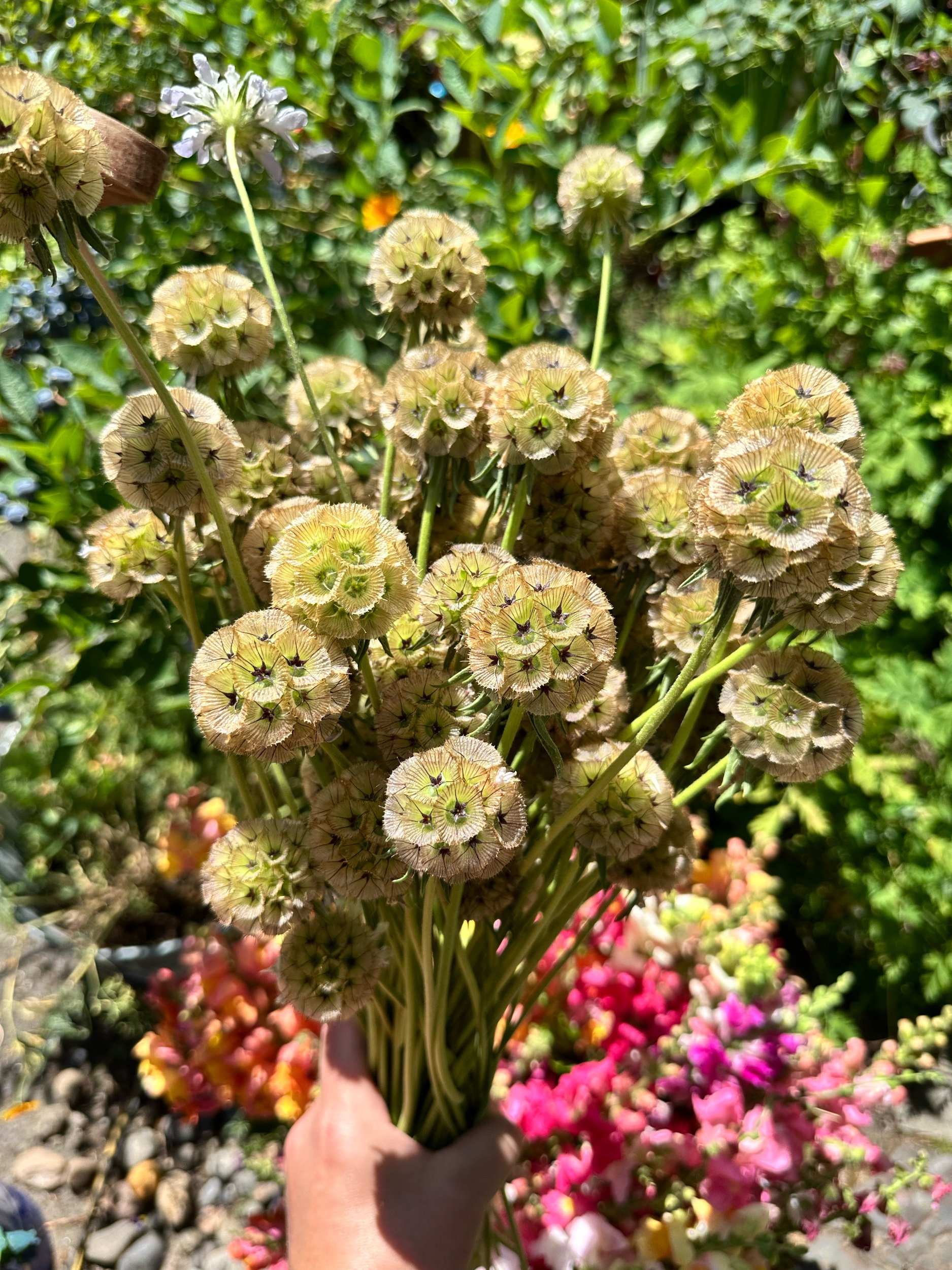
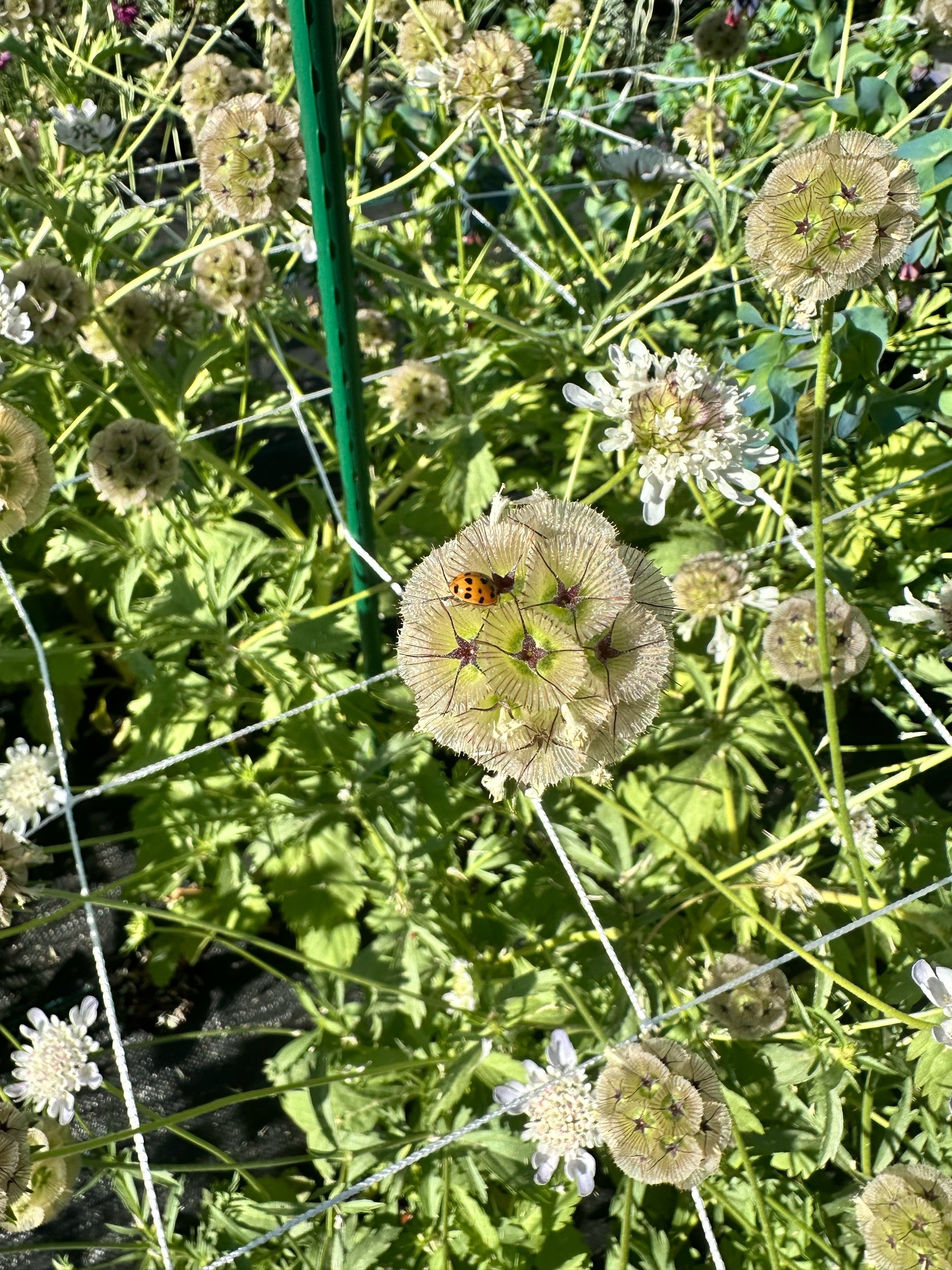
Small pale blue blossoms on wiry stems transform into highly decorative bronze-colored geometric and globe-shaped seed heads. Plants are grown primarily for the papery seed pods, which are useful for both fresh and dried bouquets. Also known as drumstick flower.
Specs:
Plant Height: 28–36"
2” soil block
LIGHT PREFERENCE:
Sun.
PLANT HEIGHT:
24-36". Plant supports (such as Hortonova used as a horizontal trellis) are required.
PLANT SPACING:
9-15".
HARDINESS ZONES:
Annual.
HARVEST:
Scabiosa atropurpurea: Flowers almost fully open. Scabiosa stellata: Fresh-cut or dried: Harvest when seed heads are light green with dark-bronze edges and the star-shaped centers are just turning black. If harvested after the centers have fully turned, or begun to fall out, the seed head will shatter and will not be useful.
SOIL REQUIREMENTS:
Rich, well-drained soil.
USES:
Excellent cut flower. Back of beds and borders.
Scabiosa atropurpurea, Scabiosa stellata
Mourning bride, drumstick flower
SEED SOURCE:
*Item description and growing information sourced from the seed company and linked accordingly
** if there are no images of the product it means that I have not grown that specific variety in the past. product images are available to review on the seed company’s website
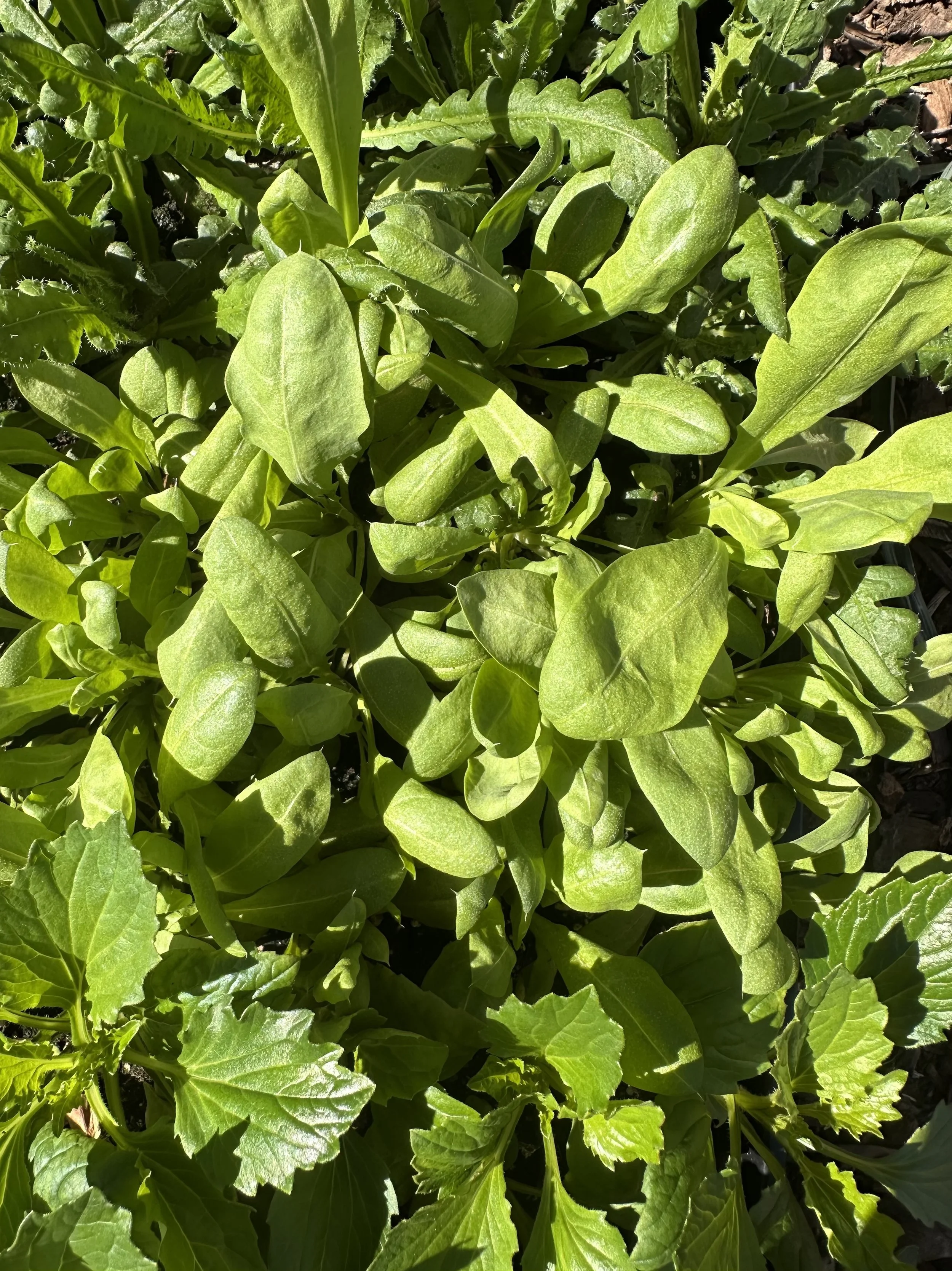
1 1/2–3" dark blue flower clusters. Robust plants produce strong stems in the field and greenhouse. Like many blue statice varieties, Forever Blue tends to bloom a bit later than other colors. Also known as annual statice and wavyleaf sea lavender.
Specs:
Plant Height: 24–30"
2” soil block
LIGHT PREFERENCE:
Sun.
PLANT HEIGHT:
24-30".
PLANT SPACING:
8-12".
HARDINESS ZONES:
Annual.
HARVEST:
Fresh or dried: When the individual flowers are mostly open and showing color. Hang to dry.
SOIL REQUIREMENTS:
Rich, well-drained soil.
USES:
Excellent for fresh and dried cut flowers.
SEED SOURCE:
*Item description and growing information sourced from the seed company and linked accordingly
** if there are no images of the product it means that I have not grown that specific variety in the past. product images are available to review on the seed company’s website
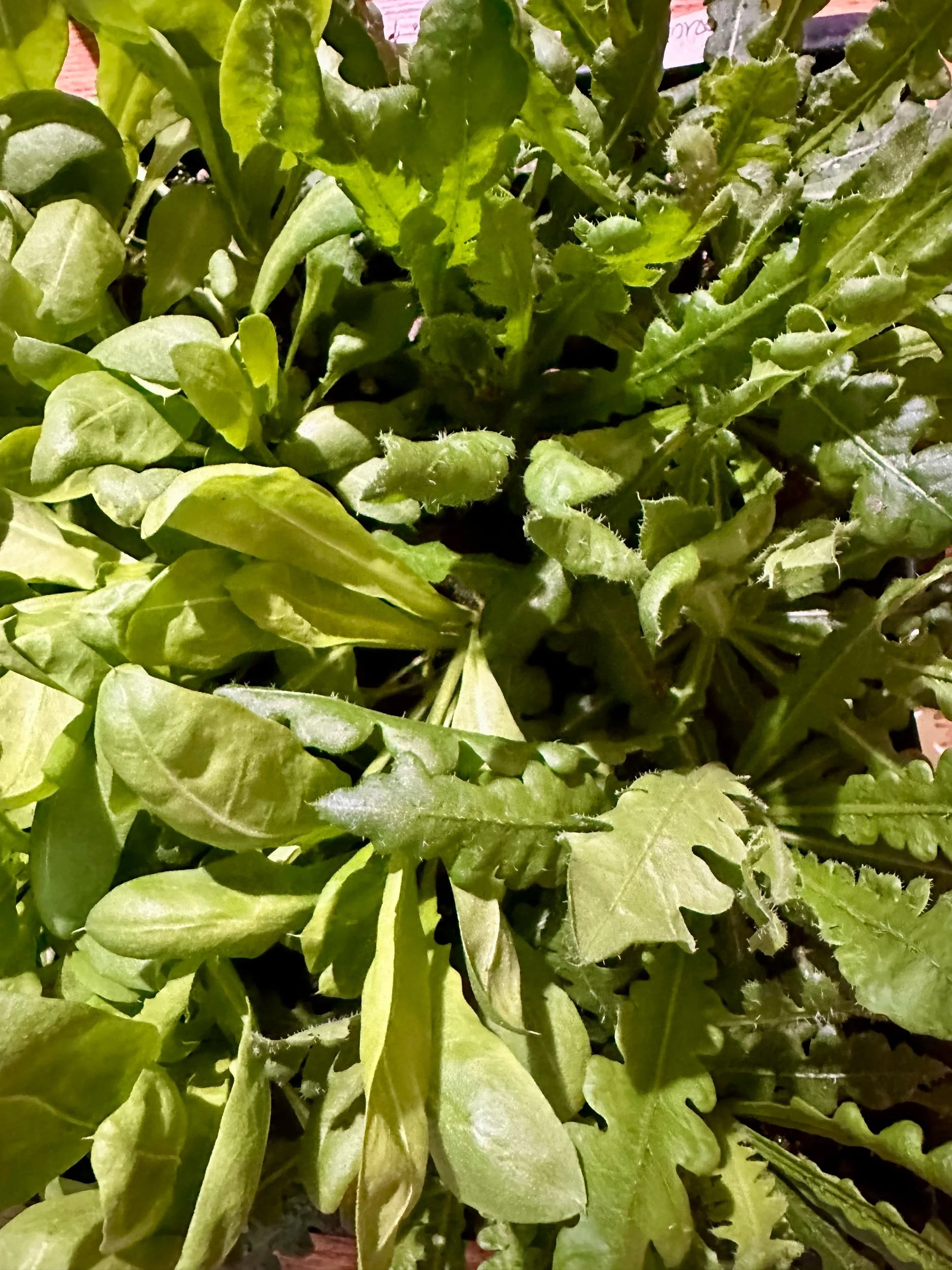
New! Unique, popular apricot and coral shades.
Similar to QIS Apricot. Productive plants yield 1 1/2–3" flower clusters on strong stems in the field or greenhouse. Statice is long-lasting for both fresh and dried bouquets. One of the best choices for a dried floral as it holds its color well and is easy to dry. Also known as wavyleaf sea lavender.
Specs:
Plant Height: 18–28"
2” soil block
LIGHT PREFERENCE:
Sun.
PLANT HEIGHT:
24-30".
PLANT SPACING:
8-12".
HARDINESS ZONES:
Annual.
HARVEST:
Fresh or dried: When the individual flowers are mostly open and showing color. Hang to dry.
SOIL REQUIREMENTS:
Rich, well-drained soil.
USES:
Excellent for fresh and dried cut flowers.
SEED SOURCE:
*Item description and growing information sourced from the seed company and linked accordingly
** if there are no images of the product it means that I have not grown that specific variety in the past. product images are available to review on the seed company’s website
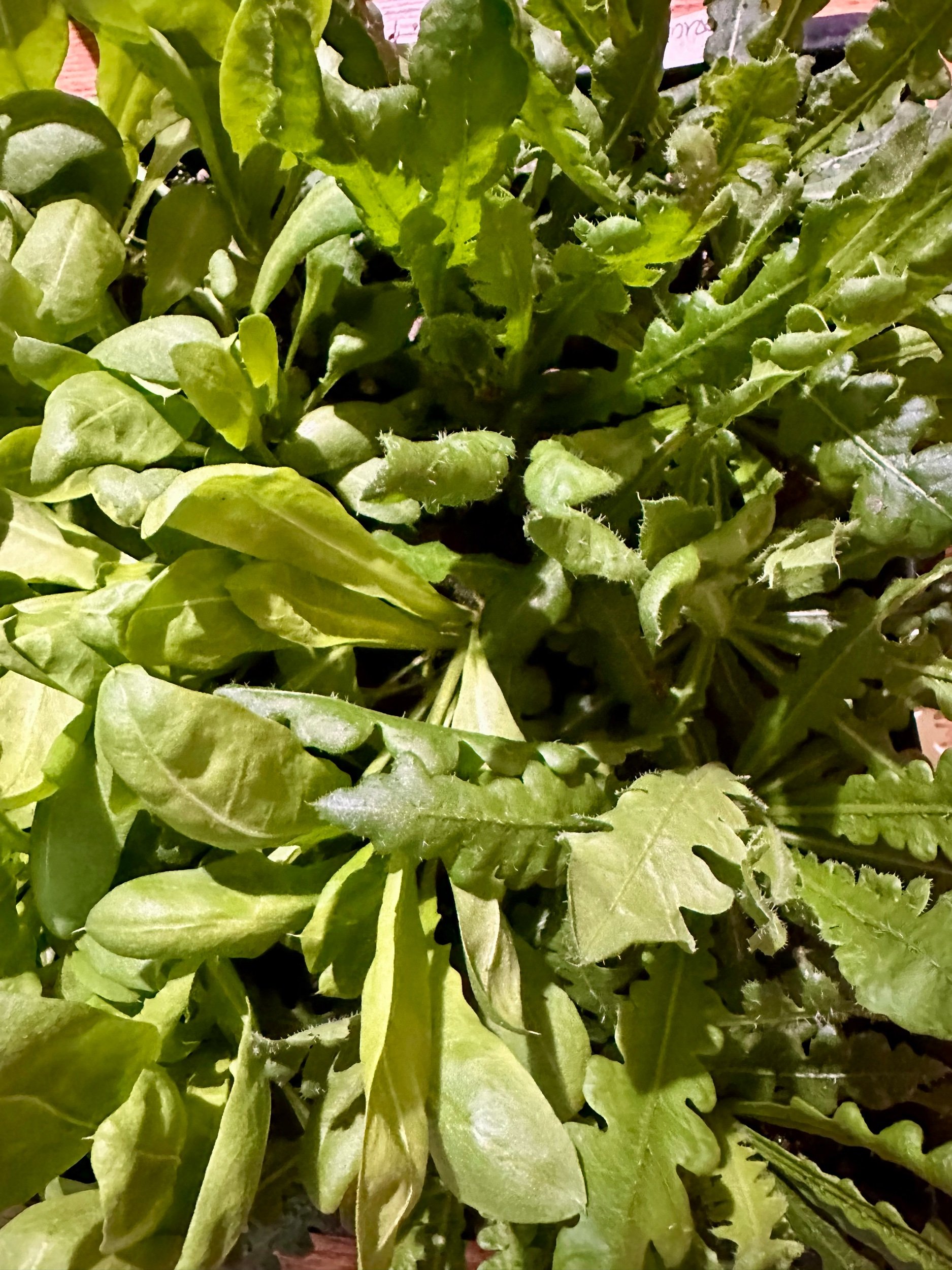
Productive plants produce 1 1/2–3" flower clusters on strong stems in the field or greenhouse. Statice is long-lasting for both fresh and dried bouquets. One of the best choices for a dried floral as it holds its color well and is easy to dry. Also known as wavyleaf sea lavender.
Specs:
Plant Height: 24–30"
2” soil block
LIGHT PREFERENCE:
Sun.
PLANT HEIGHT:
24-30".
PLANT SPACING:
8-12".
HARDINESS ZONES:
Annual.
HARVEST:
Fresh or dried: When the individual flowers are mostly open and showing color. Hang to dry.
SOIL REQUIREMENTS:
Rich, well-drained soil.
USES:
Excellent for fresh and dried cut flowers.
SEED SOURCE:
*Item description and growing information sourced from the seed company and linked accordingly
** if there are no images of the product it means that I have not grown that specific variety in the past. product images are available to review on the seed company’s website
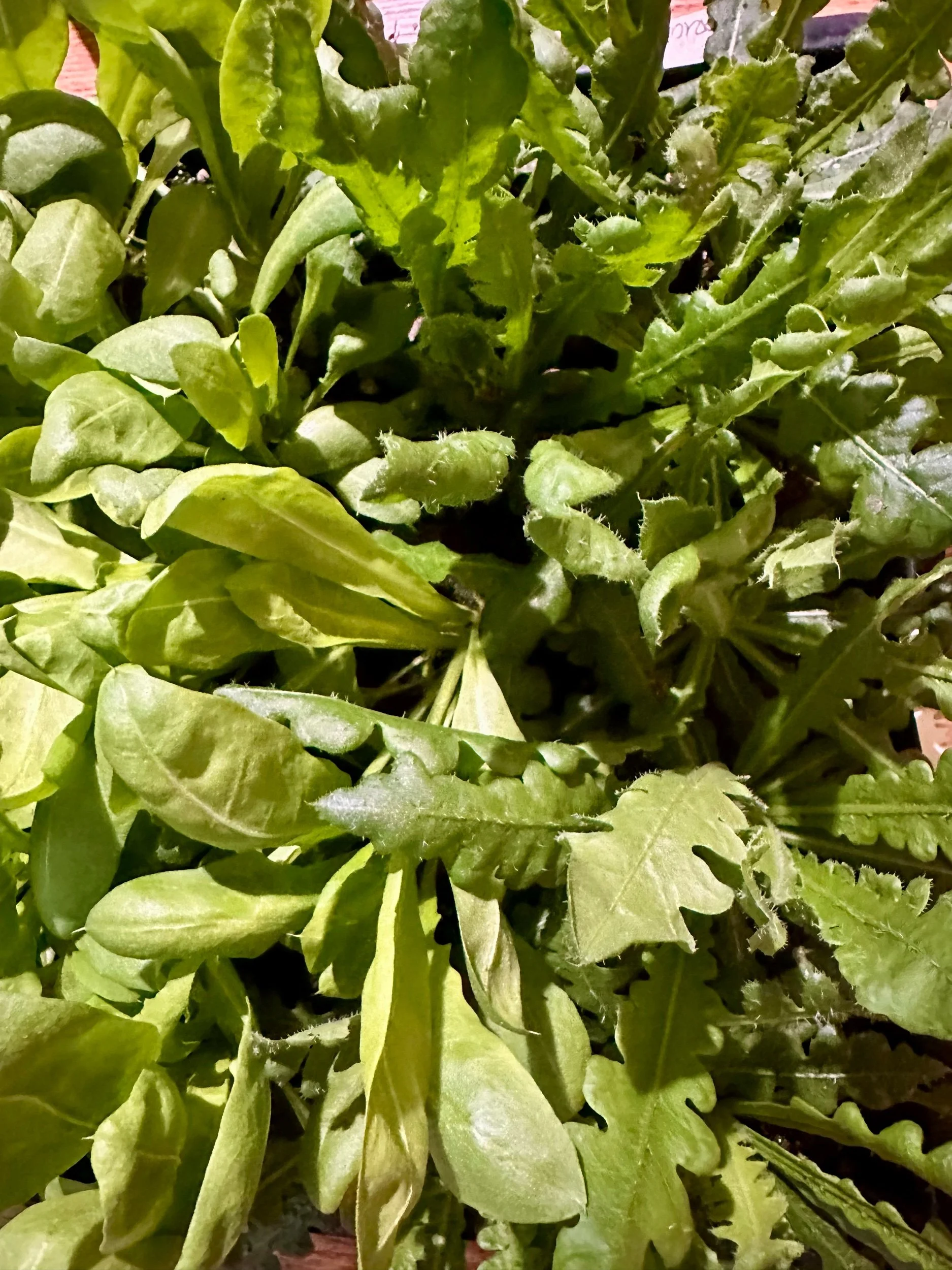
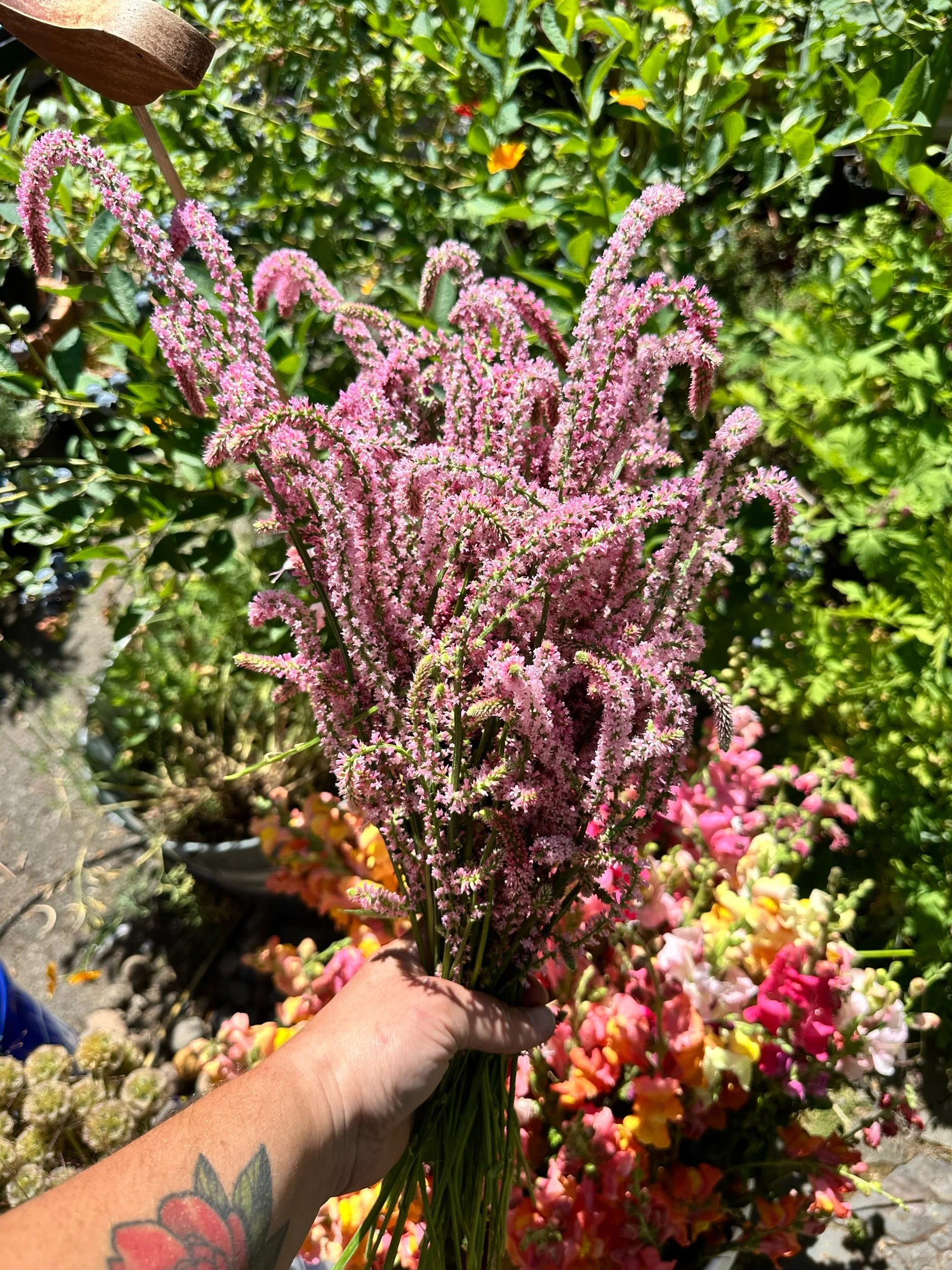
Easy to use as a fresh or dried cut flower.
Whimsical and wild statice looks to be a thing of fairytales or a sea-dwelling creature. Compared to L. sinuatum types, this statice has a very different look but is also earlier and easier to harvest. Plants have mostly basal leaves, which makes the stems easy to locate for cutting, and there are almost no leaves to strip away. Low-growing plants produced 2–3 flushes of harvestable stems in our trials. Excellent for dried flowers or fresh cuts. Flowers dry beautifully, holding their color well. Early statice. Also commonly known as Russian statice and rat tail statice.
Specs:
Plant Height: 20–30"
2” soil block
LIGHT PREFERENCE:
Sun.
PLANT HEIGHT:
24-30".
PLANT SPACING:
8-12".
HARDINESS ZONES:
Annual.
HARVEST:
Fresh or dried: When the individual flowers are mostly open and showing color. Hang to dry.
SOIL REQUIREMENTS:
Rich, well-drained soil.
USES:
Excellent for fresh and dried cut flowers.
SEED SOURCE:
*Item description and growing information sourced from the seed company and linked accordingly
** if there are no images of the product it means that I have not grown that specific variety in the past. product images are available to review on the seed company’s website
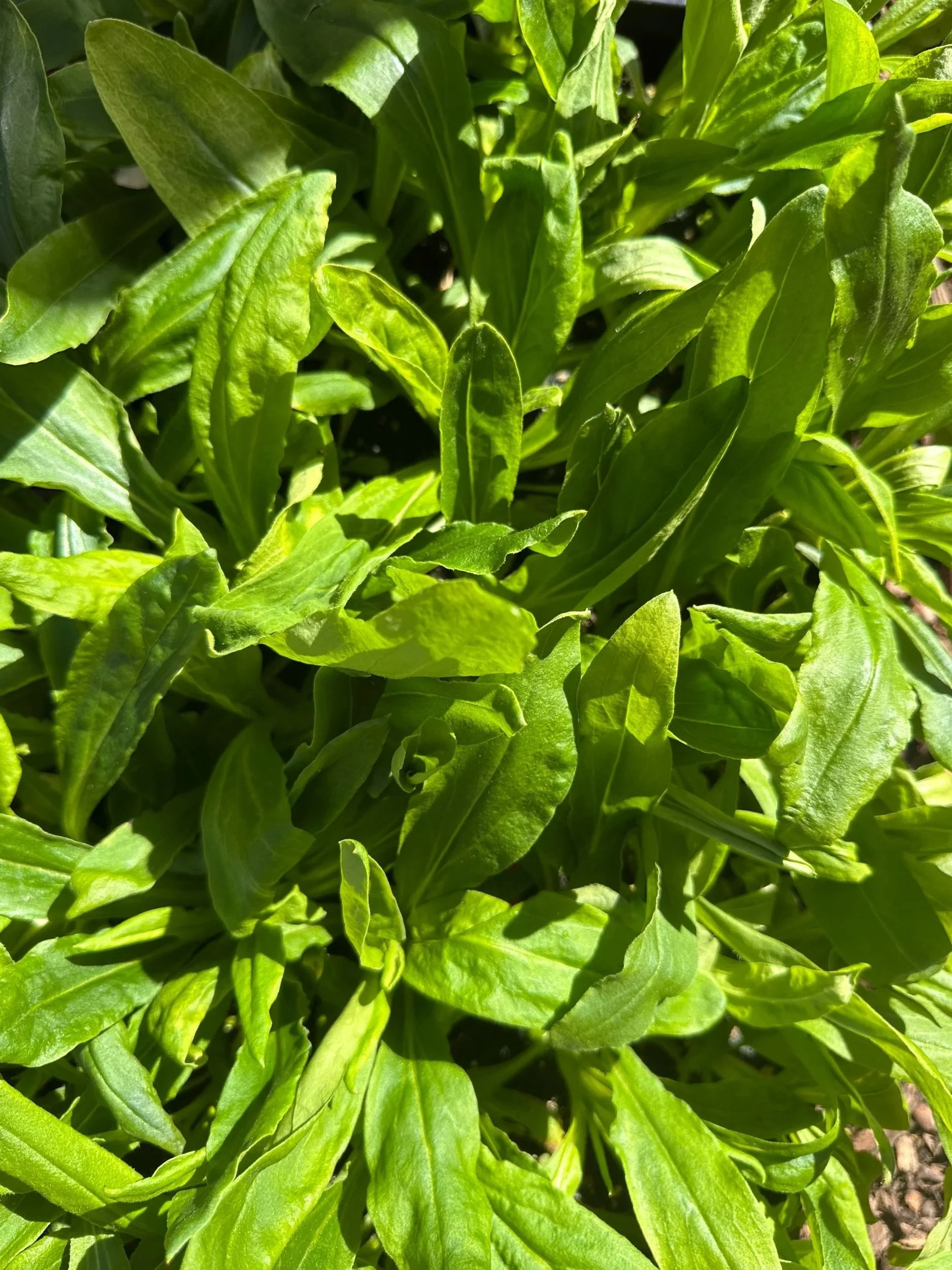
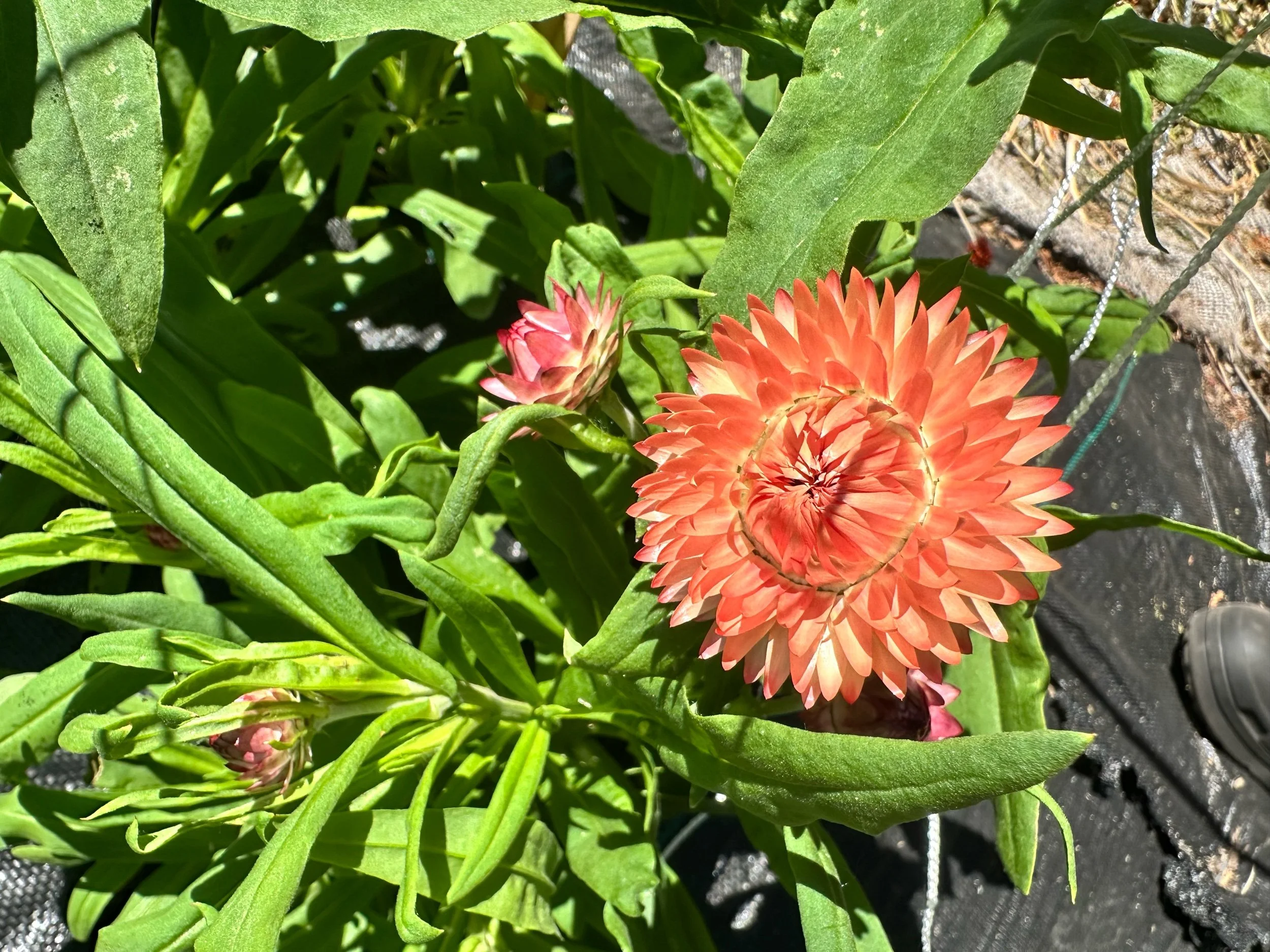
The color range includes yellows, peach, oranges, dusty rose, and reds, ever changing through the plant’s evolution. Long stems and very long-lasting cut, field (past frost) and dried flowers. Attract a diversity of pollinators.
Highly productive and versatile, these tall, branching plants yield an abundance of double blooms, each measuring about 2 to 2½ inches wide. They’re an excellent choice for both fresh bouquets and dried arrangements. Frequent harvesting or deadheading will encourage continued flowering and higher overall yields. Also known as bracted strawflower.
Specs:
Plant Height: 36–40"
2” soil block
LIGHT PREFERENCE:
Sun.
PLANT HEIGHT:
36-40". May require some support.
PLANT SPACING:
10-12".
HARDINESS ZONES:
Annual.
STEM LENGTH:
12-20".
VASE LIFE:
7-10 days.
STORAGE TEMPERATURE:
70-75°F (21-24°C).
HARVEST:
For best results, cut stems when the flowers have opened to show 2–3 layers of petals, but before the center becomes visible. Stage matters—blooms that are too mature may look ready, especially after closing at night or on cloudy days, but will reopen in brighter light and reveal that they’ve passed their ideal cutting window.
To minimize picking overmature blooms:
Harvest during sunny morning conditions, or
Allow freshly cut stems to rest in a bright space for a few hours to confirm their stage
Flowers that are past their prime should be removed, particularly if you plan to dry them. As blooms continue to open during the drying process, overly mature flowers are more likely to fade, lose structure, and shatter.
SOIL REQUIREMENTS:
Average soil with good drainage.
SEED SOURCE:
*Item description and growing information sourced from the seed company and linked above
** if there are no images of the product it means that I have not grown that specific variety in the past or don’t have a decent photo readily available. product images are available to review on the seed company’s website
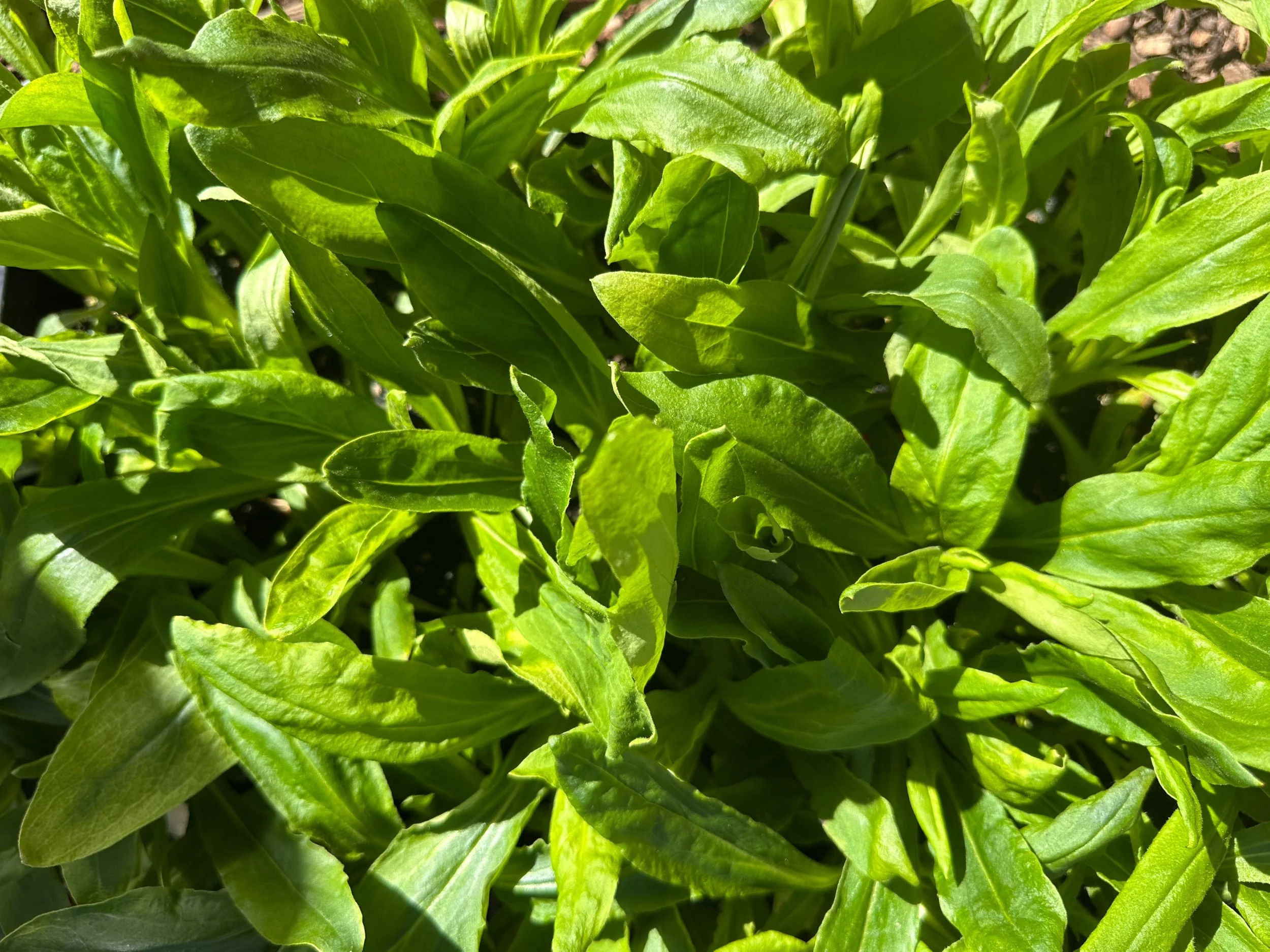
This variety is also known as Pomegranate. Long stems and very long-lasting cut, field (past frost) and dried flowers. Attract a diversity of pollinators.
Highly productive and versatile, these tall, branching plants yield an abundance of double blooms, each measuring about 2 to 2½ inches wide. They’re an excellent choice for both fresh bouquets and dried arrangements. Frequent harvesting or deadheading will encourage continued flowering and higher overall yields. Also known as bracted strawflower.
Specs:
Plant Height: 36–40"
2” soil block
LIGHT PREFERENCE:
Sun.
PLANT HEIGHT:
36-40". May require some support.
PLANT SPACING:
10-12".
HARDINESS ZONES:
Annual.
STEM LENGTH:
12-20".
VASE LIFE:
7-10 days.
STORAGE TEMPERATURE:
70-75°F (21-24°C).
HARVEST:
For best results, cut stems when the flowers have opened to show 2–3 layers of petals, but before the center becomes visible. Stage matters—blooms that are too mature may look ready, especially after closing at night or on cloudy days, but will reopen in brighter light and reveal that they’ve passed their ideal cutting window.
To minimize picking overmature blooms:
Harvest during sunny morning conditions, or
Allow freshly cut stems to rest in a bright space for a few hours to confirm their stage
Flowers that are past their prime should be removed, particularly if you plan to dry them. As blooms continue to open during the drying process, overly mature flowers are more likely to fade, lose structure, and shatter.
SOIL REQUIREMENTS:
Average soil with good drainage.
SEED SOURCE:
*Item description and growing information sourced from the seed company and linked accordingly
** if there are no images of the product it means that I have not grown that specific variety in the past. product images are available to review on the seed company’s website
Attractive mix of salmon, peach, coral, and orange hues. Long stems and very long-lasting cut, field (past frost) and dried flowers. Attract a diversity of pollinators.
Highly productive and versatile, these tall, branching plants yield an abundance of double blooms, each measuring about 2 to 2½ inches wide. They’re an excellent choice for both fresh bouquets and dried arrangements. Frequent harvesting or deadheading will encourage continued flowering and higher overall yields. Also known as bracted strawflower.
Specs:
Plant Height: 36–40"
2” soil block
LIGHT PREFERENCE:
Sun.
PLANT HEIGHT:
36-40". May require some support.
PLANT SPACING:
10-12".
HARDINESS ZONES:
Annual.
STEM LENGTH:
12-20".
VASE LIFE:
7-10 days.
STORAGE TEMPERATURE:
70-75°F (21-24°C).
HARVEST:
For best results, cut stems when the flowers have opened to show 2–3 layers of petals, but before the center becomes visible. Stage matters—blooms that are too mature may look ready, especially after closing at night or on cloudy days, but will reopen in brighter light and reveal that they’ve passed their ideal cutting window.
To minimize picking overmature blooms:
Harvest during sunny morning conditions, or
Allow freshly cut stems to rest in a bright space for a few hours to confirm their stage
Flowers that are past their prime should be removed, particularly if you plan to dry them. As blooms continue to open during the drying process, overly mature flowers are more likely to fade, lose structure, and shatter.
SOIL REQUIREMENTS:
Average soil with good drainage.
SEED SOURCE:
*Item description and growing information sourced from the seed company and linked accordingly
** if there are no images of the product it means that I have not grown that specific variety in the past. product images are available to review on the seed company’s website
Plants produce dark wine (almost black) flowers 2–2 1/2" across. Fully open blooms reveal contrasting fiery-orange center. Long stems and very long-lasting cut, field (past frost) and dried flowers. Attract a diversity of pollinators.
Highly productive and versatile, these tall, branching plants yield an abundance of double blooms, each measuring about 2 to 2½ inches wide. They’re an excellent choice for both fresh bouquets and dried arrangements. Frequent harvesting or deadheading will encourage continued flowering and higher overall yields. Also known as bracted strawflower.
Specs:
Plant Height: 36–40"
2” soil block
LIGHT PREFERENCE:
Sun.
PLANT HEIGHT:
36-40". May require some support.
PLANT SPACING:
10-12".
HARDINESS ZONES:
Annual.
STEM LENGTH:
12-20".
VASE LIFE:
7-10 days.
STORAGE TEMPERATURE:
70-75°F (21-24°C).
HARVEST:
For best results, cut stems when the flowers have opened to show 2–3 layers of petals, but before the center becomes visible. Stage matters—blooms that are too mature may look ready, especially after closing at night or on cloudy days, but will reopen in brighter light and reveal that they’ve passed their ideal cutting window.
To minimize picking overmature blooms:
Harvest during sunny morning conditions, or
Allow freshly cut stems to rest in a bright space for a few hours to confirm their stage
Flowers that are past their prime should be removed, particularly if you plan to dry them. As blooms continue to open during the drying process, overly mature flowers are more likely to fade, lose structure, and shatter.
SOIL REQUIREMENTS:
Average soil with good drainage.
SEED SOURCE:
*Item description and growing information sourced from the seed company and linked accordingly
** if there are no images of the product it means that I have not grown that specific variety in the past. product images are available to review on the seed company’s website
Profuse bloomers for fresh or dried arrangements.
The popular everlasting flower that is easy and fun to grow. These come in red, pink, salmon, lemon, white, lilac, and more! This Australian native plant was introduced to England in 1791 and many colors where developed by German horticulturist Herren Ebritsch in the mid-19th century. Great for floral craft projects and more! Attract a diversity of pollinators. Long stems and very long-lasting cut, field (past frost) and dried flowers.
Highly productive and versatile, these tall, branching plants yield an abundance of double blooms, each measuring about 2 to 2½ inches wide. They’re an excellent choice for both fresh bouquets and dried arrangements. Frequent harvesting or deadheading will encourage continued flowering and higher overall yields. Also known as bracted strawflower.
Specs:
Plant Height: 36–40"
2” soil block
LIGHT PREFERENCE:
Sun.
PLANT HEIGHT:
36-40". May require some support.
PLANT SPACING:
10-12".
HARDINESS ZONES:
Annual.
STEM LENGTH:
12-20".
VASE LIFE:
7-10 days.
STORAGE TEMPERATURE:
70-75°F (21-24°C).
HARVEST:
For best results, cut stems when the flowers have opened to show 2–3 layers of petals, but before the center becomes visible. Stage matters—blooms that are too mature may look ready, especially after closing at night or on cloudy days, but will reopen in brighter light and reveal that they’ve passed their ideal cutting window.
To minimize picking overmature blooms:
Harvest during sunny morning conditions, or
Allow freshly cut stems to rest in a bright space for a few hours to confirm their stage
Flowers that are past their prime should be removed, particularly if you plan to dry them. As blooms continue to open during the drying process, overly mature flowers are more likely to fade, lose structure, and shatter.
SOIL REQUIREMENTS:
Average soil with good drainage.
SEED SOURCE:
*Item description and growing information sourced from the seed company and linked accordingly
** if there are no images of the product it means that I have not grown that specific variety in the past. product images are available to review on the seed company’s website
Profuse bloomers for fresh or dried arrangements.
The strawflower name does not disappoint; these flowers really do appear like colored straw. Double blooms 2"–2 ½" across in rose, salmon, yellow, gold, scarlet, red, silver, and white. An everlasting cut flower, the stiff, papery bracts never wilt! Swiss Giants are extra-large, double blooms on long stems in many delightfully bright shades; great for borders and attracting pollinators. Plants thrive in heat and tolerate drought. Attract a diversity of pollinators.
Specs:
Plant Height: 36–40"
2” soil block
LIGHT PREFERENCE:
Sun.
PLANT HEIGHT:
36-40". May require some support.
PLANT SPACING:
10-12".
HARDINESS ZONES:
Annual.
STEM LENGTH:
12-20".
VASE LIFE:
7-10 days.
STORAGE TEMPERATURE:
70-75°F (21-24°C).
HARVEST:
Keep blooms harvested or deadheaded for optimal yields. Fresh or dried: Cut when 2-3 layers of petals have unfolded but before flowers fully open to reveal center. Note: Blooms that are very open, past optimal maturity, will close in the dark of night and on dark, overcast days. These blooms can appear as if they are at the at a good stage for cutting, though they are overmature. To avoid these misleading blooms, harvest on bright mornings or let your harvested blooms set in light for a few hours. Overmature blooms should open back up for identification and discard. Avoiding overmature blooms is especially important if being used for drying as blooms continue to open during the drying process. When dried, overmature blooms will shatter (fall apart) and appear discolored.
SOIL REQUIREMENTS:
Average soil with good drainage.
SEED SOURCE:
*Item description and growing information sourced from the seed company and linked accordingly
** if there are no images of the product it means that I have not grown that specific variety in the past. product images are available to review on the seed company’s website
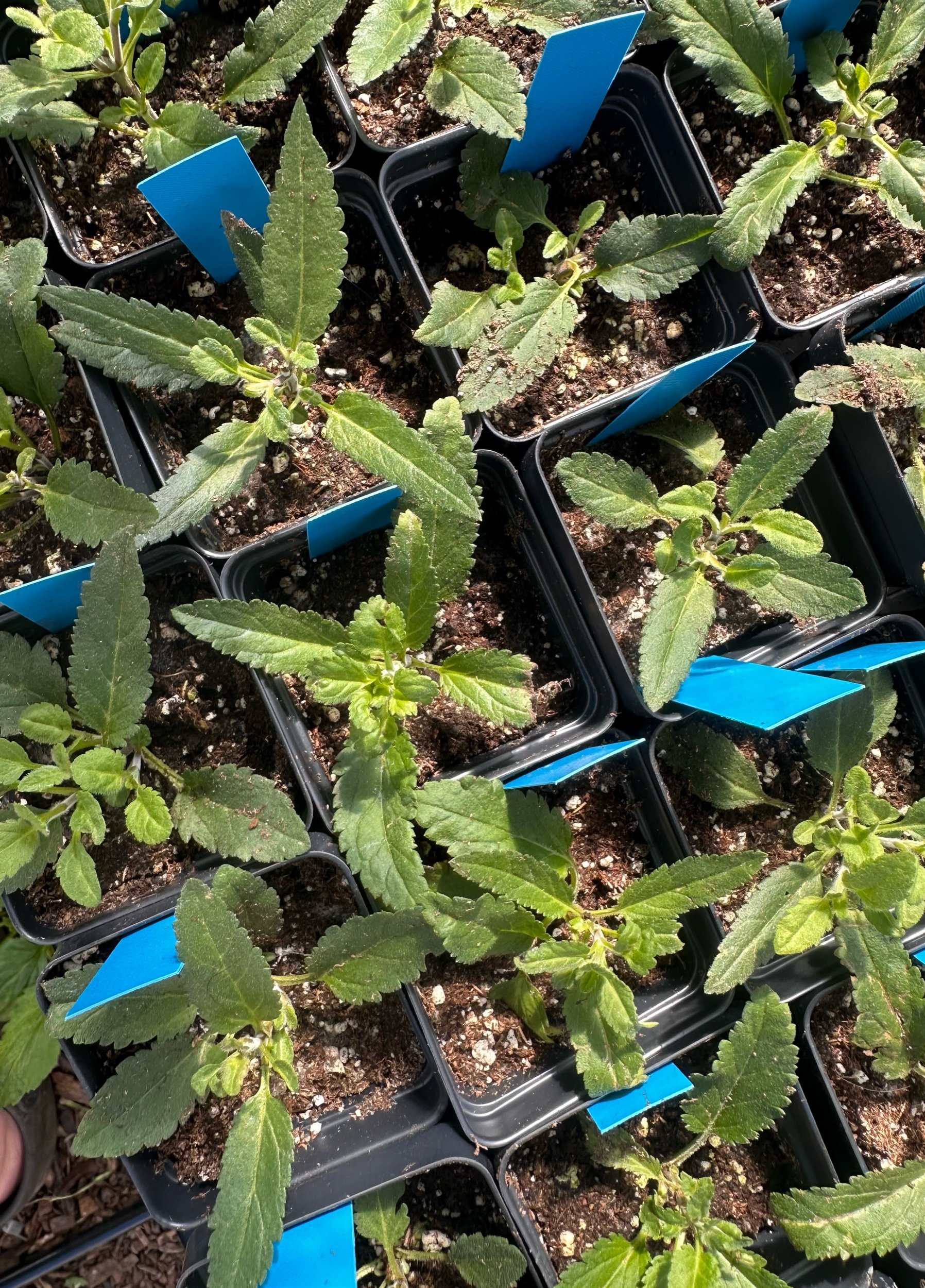
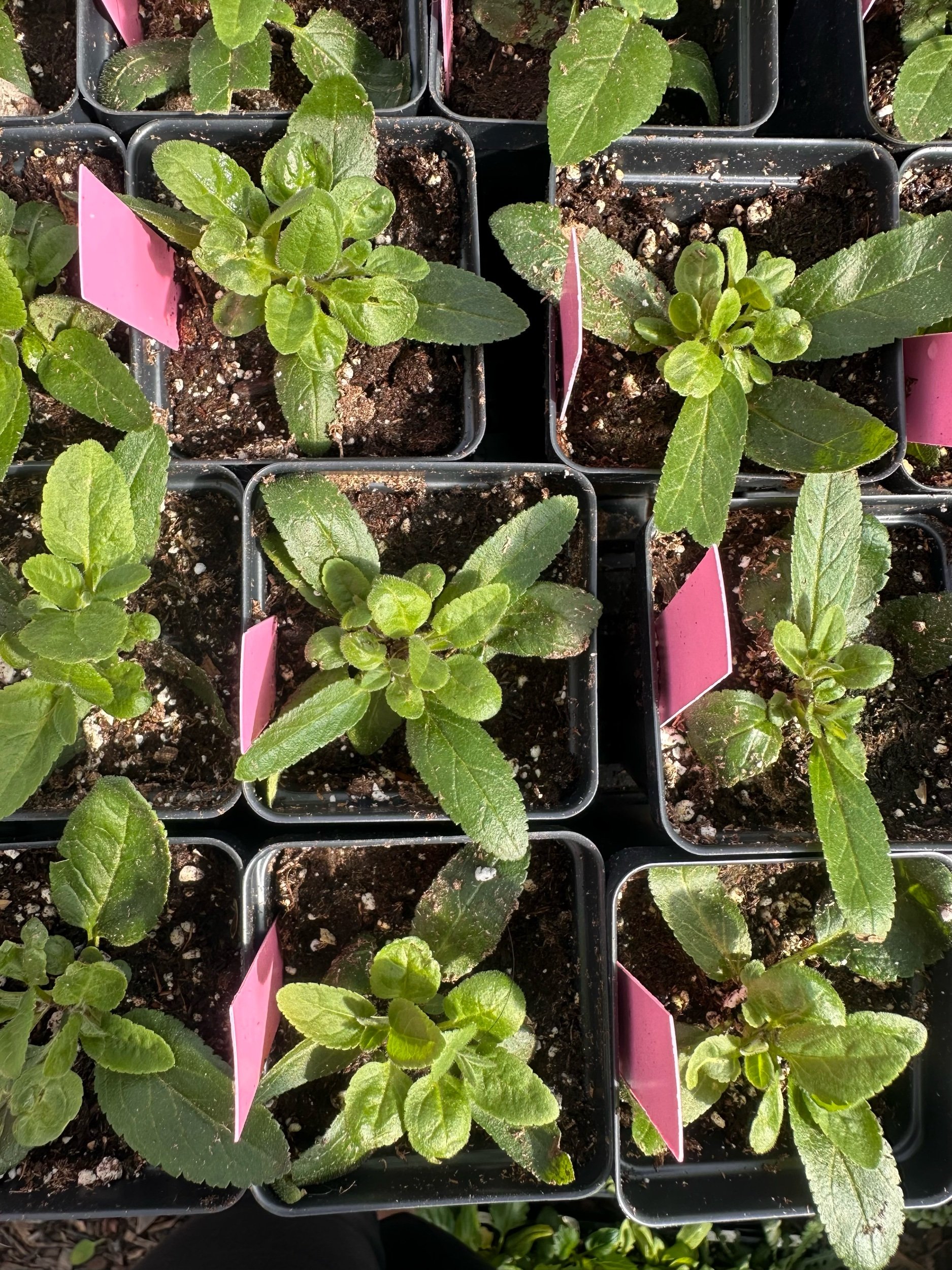
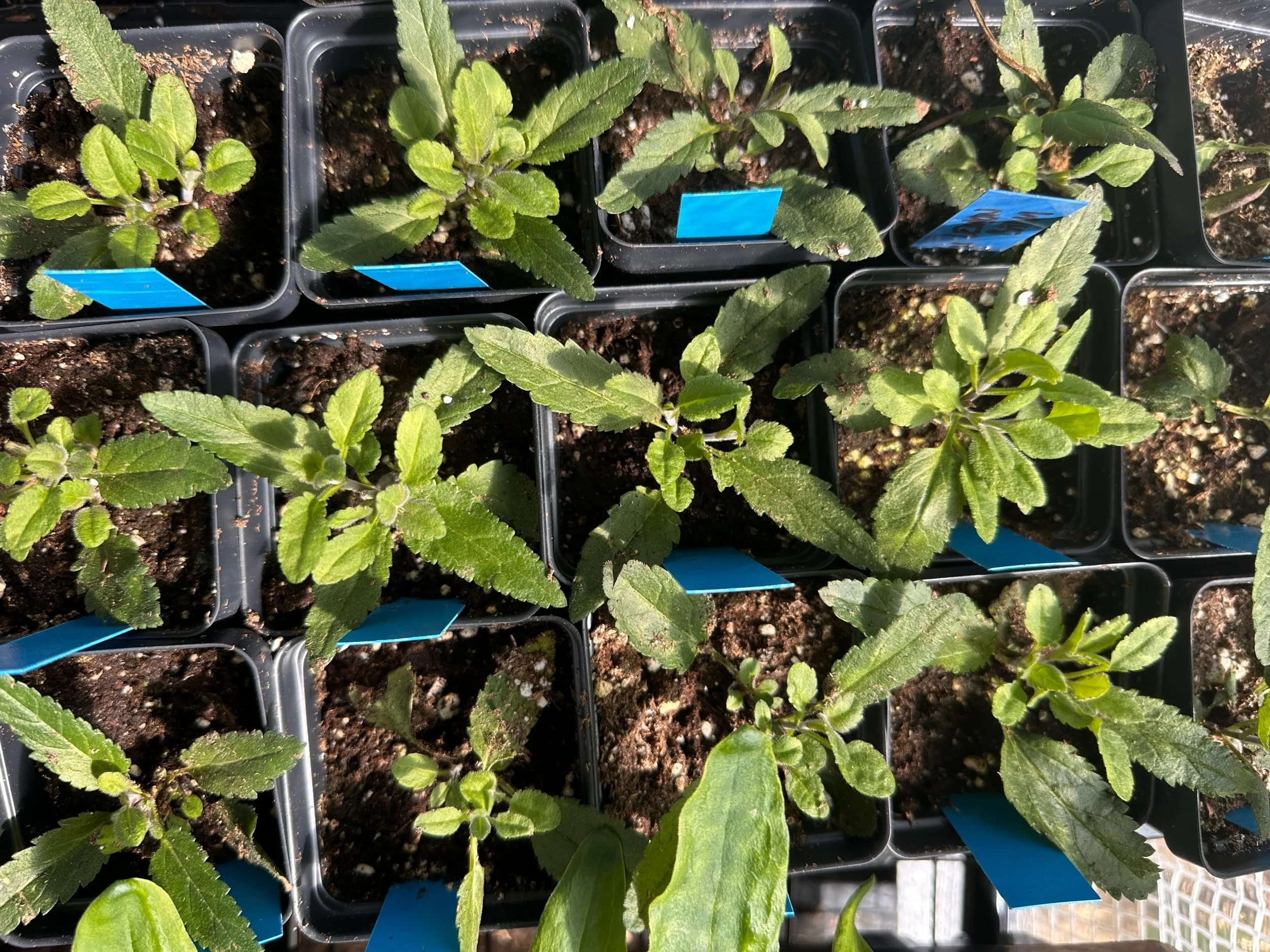
The only Veronica you need to know about. The Skyler™ series needs no vernalization and blooms freely the first year. It re-blooms after each cut. (Cut all the way to the ground at harvest time to encourage regrowth.) Skyler is fully winter hardy. Bred by Danziger of Israel.
Plugs sourced from Gro ‘n Sell/Farmer Bailey and then lovingly grown to have a larger root ball filling a 2.5” pot.
Specs:
Plant Height: 18-30"
2.5” pot
Genus Veronica
Species
longifolia
Family
Plantaginaceae
Netting / Staking
No
Temperature Range
-35 to 90
Spacing
9"
Soil Preference
Well drained, generally fertile soil.
Day Length
Day Neutral
Pinching
If the plant is not already branching, pinch once growth has resumed after transplant.
When to Plant
Spring or Fall. Quite adaptable.
Harvesting
Cut when the spike is 1/3 open. Harvest the entire plant, all the way to the ground to encourage rebloom.
Post Harvest Care
Holding solution in the cooler.
Diseases / Insects
Generally pest free.
Bailey's Notes
The Skyler series does not need a cold winter period, unlike other Veronica longifolia cultivars. It will flower the first year from planting. Cut to the ground, and it will generally send out an additional flush of flowers. Depending on location you may harvest 2-4 flushes of flowers per year. It is fully hardy. In its second and third years, you will see many more stems emerge as the plant spreads. You may need to replace them every 4 or 5 years if production declines.
PLUG SOURCE:
*Item description and growing information sourced from the seed company and linked accordingly
** if there are no images of the product it means that I have not grown that specific variety in the past. product images are available to review on the seed company’s website
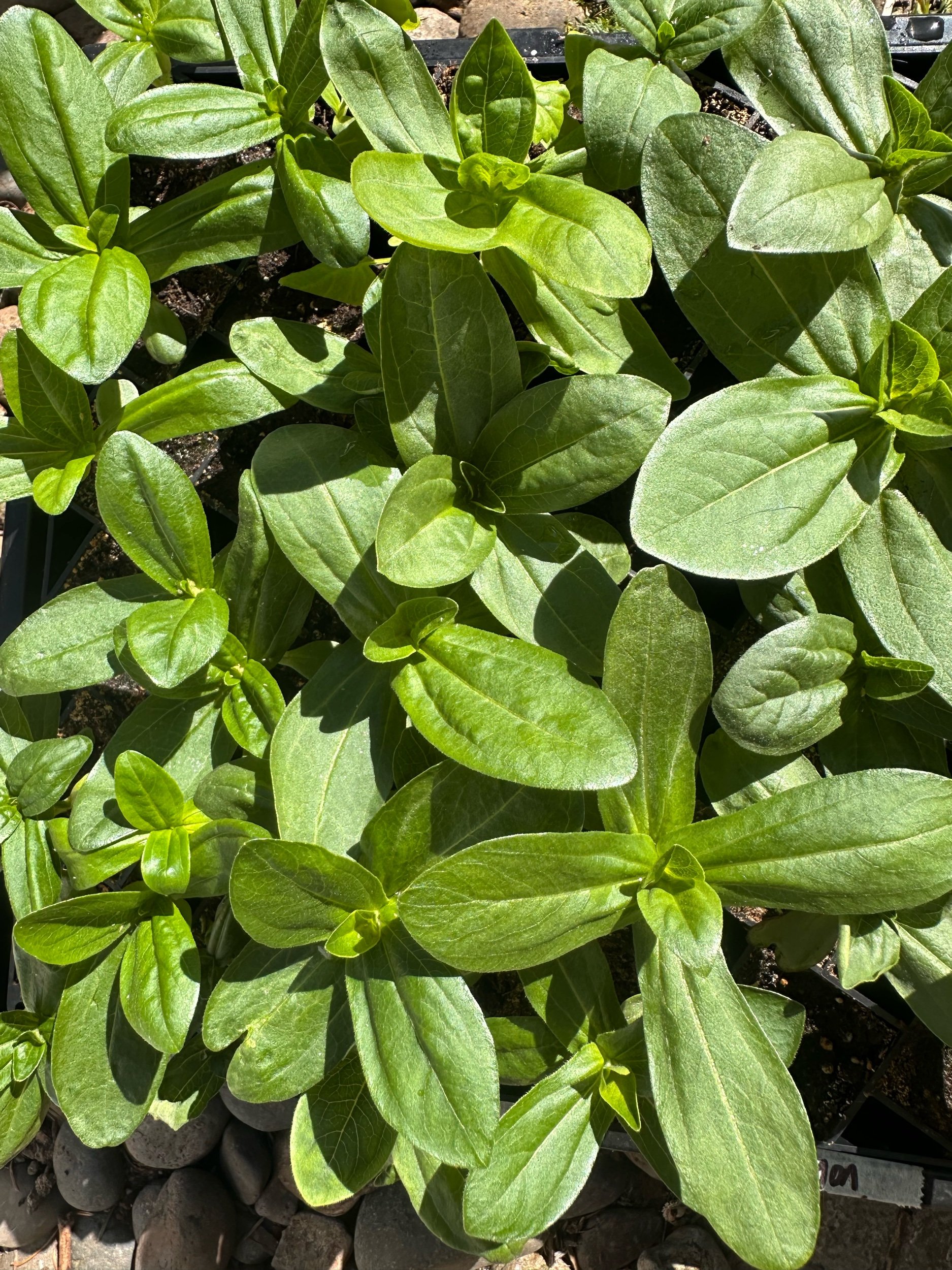
The premium zinnia.
Recommended by the Association of Specialty Cut Flower Growers. High yields of long, sturdy stems with 4–6" fully double, dahlia-like blooms. Excellent vase life. Vigorous plants hold up well in summer heat and rain. Low susceptibility to powdery mildew. Cut-and-come-again flower, yielding multiple cuts over the season.
Specs:
Plant Height: 40–50"
2.5” pot
LIGHT PREFERENCE:
Sun.
PLANT HEIGHT:
Varies. No support is necessary.
PLANT SPACING:
9-12".
HARDINESS ZONES:
Annual.
VASE LIFE:
7-10 days.
STORAGE TEMPERATURE:
40-50°F (4-10°C) Zinnias are sensitive to cold damage.
HARVEST:
Before completely open. Stem is firm from point of cut to just below the bloom.
SOIL REQUIREMENTS:
Fertile soil rich in organic matter. pH: 6.3-6.8 preferred.
USES:
Taller varieties make excellent cut flowers. Beds, borders, and mass plantings.
SCIENTIFIC NAME:
Zinnia spp.
SEED SOURCE:
*Item description and growing information sourced from the seed company and linked accordingly
** if there are no images of the product it means that I have not grown that specific variety in the past. product images are available to review on the seed company’s website
This subtle, romantic mix includes the softest range of creamy linen, pale peach, and dusty rose flowers. The large pastel blooms sit atop long, strong stems and have an unusual iridescent lavender ring around their striking purple eyes. As flowers age, their petal tips turn a muted rosy pink. This rare color combination gives the blooms an almost opalescent quality.
Please note that this variety is still a work in progress and is not 100% uniform, so you will undoubtedly find a few off types in the mix. We will continue to refine and improve this selection, but are making it available before it’s “perfect” for you to grow and enjoy.
Specs:
Plant Height: 48-56"
2.5” pot
LIGHT PREFERENCE:
Sun.
PLANT HEIGHT:
48-56”
PLANT SPACING:
9-12"
PINCH:
when 8-12” tall
HARDINESS ZONES:
Annual.
VASE LIFE:
7-10 days.
STORAGE TEMPERATURE:
40-50°F (4-10°C) Zinnias are sensitive to cold damage.
HARVEST:
Use the “wiggle test”: Grab the stem about 8 in down from the flower and gently shake it. If the stem is droopy or bends, don’t cut yet. If the stem is stiff and remains erect, it is ready to harvest. Do not put in the cooler. Zinnias are notorious for making their water murky. To combat this, add a few drops of bleach to the water. Expect a vase life of 7 days.
USES:
Taller varieties make excellent cut flowers. Beds, borders, and mass plantings.
SCIENTIFIC NAME:
Zinnia spp.
SEED SOURCE:
*Item description and growing information sourced from the seed company and linked accordingly
** if there are no images of the product it means that I have not grown that specific variety in the past. product images are available to review on the seed company’s website
This beautiful large-flowered pastel mix includes soft pink, the palest lavender, and blush, with the occasional ivory and soft peach. Plants have long, strong stems and are incredibly productive. Many of the blooms have a notable cactus-like form and petals are displayed in varying levels of fullness. Seed for this mix originally came from Kori at Dawn Creek Farm.
Please note that this variety is still a work in progress and is not 100% uniform, so you will undoubtedly find a few off types in the mix. We will continue to refine and improve this selection, but are making it available before it’s “perfect” for you to grow and enjoy.
Specs:
Plant Height: 48-56"
2.5” pot
LIGHT PREFERENCE:
Sun.
PLANT HEIGHT:
48-56”
PLANT SPACING:
9-12"
PINCH:
when 8-12” tall
HARDINESS ZONES:
Annual.
VASE LIFE:
7-10 days.
STORAGE TEMPERATURE:
40-50°F (4-10°C) Zinnias are sensitive to cold damage.
HARVEST:
Use the “wiggle test”: Grab the stem about 8 in down from the flower and gently shake it. If the stem is droopy or bends, don’t cut yet. If the stem is stiff and remains erect, it is ready to harvest. Do not put in the cooler. Zinnias are notorious for making their water murky. To combat this, add a few drops of bleach to the water. Expect a vase life of 7 days.
USES:
Taller varieties make excellent cut flowers. Beds, borders, and mass plantings.
SCIENTIFIC NAME:
Zinnia spp.
SEED SOURCE:
*Item description and growing information sourced from the seed company and linked accordingly
** if there are no images of the product it means that I have not grown that specific variety in the past. product images are available to review on the seed company’s website
This variety is named for the most beautiful time of day—the hour before the sun sets on the horizon. Large flowers come in a range of warm honey and cantaloupe shades that look as if they are glowing. As flowers age, the lower petals take on the faintest cranberry edging that beautifully complements their red eyes. This is the very first variety bred on the farm.
Please note that this variety is still a work in progress and is not 100% uniform, so you will undoubtedly find a few off types in the mix. We will continue to refine and improve this selection, but are making it available before it’s “perfect” for you to grow and enjoy.
Specs:
Plant Height: 48-56"
2.5” pot
LIGHT PREFERENCE:
Sun.
PLANT HEIGHT:
48-56”
PLANT SPACING:
9-12"
PINCH:
when 8-12” tall
HARDINESS ZONES:
Annual.
VASE LIFE:
7-10 days.
STORAGE TEMPERATURE:
40-50°F (4-10°C) Zinnias are sensitive to cold damage.
HARVEST:
Use the “wiggle test”: Grab the stem about 8 in down from the flower and gently shake it. If the stem is droopy or bends, don’t cut yet. If the stem is stiff and remains erect, it is ready to harvest. Do not put in the cooler. Zinnias are notorious for making their water murky. To combat this, add a few drops of bleach to the water. Expect a vase life of 7 days.
USES:
Taller varieties make excellent cut flowers. Beds, borders, and mass plantings.
SCIENTIFIC NAME:
Zinnia elegans
SEED SOURCE:
*Item description and growing information sourced from the seed company and linked accordingly
** if there are no images of the product it means that I have not grown that specific variety in the past. product images are available to review on the seed company’s website
This giant-flowered mix includes shades of linen, icy lavender, pale pink, soft peach, and palomino. As flowers age, the lower petals often fade to turquoise dusted with lavender, giving blooms an icy metallic quality. The flower heads are dense and leathery and the backs of the petals have apple-green veining. To experience their full range of coloring, allow flowers to mature on the plant.
Please note that this variety is still a work in progress and is not 100% uniform, so you will undoubtedly find a few off types in the mix. We will continue to refine and improve this selection, but are making it available before it’s “perfect” for you to grow and enjoy.
Specs:
Plant Height: 48-56"
2.5” pot
LIGHT PREFERENCE:
Sun.
PLANT HEIGHT:
48-56”
PLANT SPACING:
9-12"
PINCH:
when 8-12” tall
HARDINESS ZONES:
Annual.
VASE LIFE:
7-10 days.
STORAGE TEMPERATURE:
40-50°F (4-10°C) Zinnias are sensitive to cold damage.
HARVEST:
Use the “wiggle test”: Grab the stem about 8 in down from the flower and gently shake it. If the stem is droopy or bends, don’t cut yet. If the stem is stiff and remains erect, it is ready to harvest. Do not put in the cooler. Zinnias are notorious for making their water murky. To combat this, add a few drops of bleach to the water. Expect a vase life of 7 days.
USES:
Taller varieties make excellent cut flowers. Beds, borders, and mass plantings.
SCIENTIFIC NAME:
Zinnia spp.
SEED SOURCE:
*Item description and growing information sourced from the seed company and linked accordingly
** if there are no images of the product it means that I have not grown that specific variety in the past. product images are available to review on the seed company’s website
Bright salmon color with low susceptibility to powdery mildew.
Blooms are 1 1/2–2 1/2", double and semidouble. These petite, yet sturdy, blooms make excellent, reliable accent flowers for market bouquets, wedding flowers, and event work. Cut-and-come-again flower, yielding multiple cuts over the season.
Specs:
Plant Height: 30–40"
2.5” pot
LIGHT PREFERENCE:
Sun.
PLANT HEIGHT:
Varies. No support is necessary.
PLANT SPACING:
9-12".
HARDINESS ZONES:
Annual.
VASE LIFE:
7-10 days.
STORAGE TEMPERATURE:
40-50°F (4-10°C) Zinnias are sensitive to cold damage.
HARVEST:
Before completely open. Stem is firm from point of cut to just below the bloom.
SOIL REQUIREMENTS:
Fertile soil rich in organic matter. pH: 6.3-6.8 preferred.
USES:
Taller varieties make excellent cut flowers. Beds, borders, and mass plantings.
SCIENTIFIC NAME:
Zinnia spp.
SEED SOURCE:
*Item description and growing information sourced from the seed company and linked accordingly
** if there are no images of the product it means that I have not grown that specific variety in the past. product images are available to review on the seed company’s website
(Zinnia elegans). We just can't get enough of these vibrant, dahlia-flowered beauties! Large 3-inch blooms display an incredible lime green, pastel pink to red ombre with red centers. Stems reach 25 inches tall, and the plant remains sturdy. These make an extra long-lasting cut flower. The butterflies seemed to especially appreciate this variety! Amazing!
Annual
Height at maturity: 30-40"
6-8 hours of full sun
Plant Spacing: 9-12"
Ideal Temperature: 70-95 F
Frost Hardy: No
Specs:
Plant Height: 30–40"
2.5” pot
SEED SOURCE:
*Item description and growing information sourced from the seed company and linked accordingly
** if there are no images of the product it means that I have not grown that specific variety in the past. product images are available to review on the seed company’s website
Unusual antique color.
These 2–3½" blooms have soft burgundy outer petals that gradually lighten to creamy lime centers. A mix of fully double and semidouble flowers with a small percentage of singles. Cut-and-come-again flower, yielding multiple cuts over the season. Previously and widely known as 'Queen Red Lime.' Over the years, as the breeder has developed new colors in the series, he has transitioned the series name from "Queen" to "Queeny." To respect his wishes, we have updated the product names accordingly.
Specs:
Plant Height: 30–40"
2.5” pot
LIGHT PREFERENCE:
Sun.
PLANT HEIGHT:
Varies. No support is necessary.
PLANT SPACING:
9-12".
HARDINESS ZONES:
Annual.
VASE LIFE:
7-10 days.
STORAGE TEMPERATURE:
40-50°F (4-10°C) Zinnias are sensitive to cold damage.
HARVEST:
Before completely open. Stem is firm from point of cut to just below the bloom.
SOIL REQUIREMENTS:
Fertile soil rich in organic matter. pH: 6.3-6.8 preferred.
USES:
Taller varieties make excellent cut flowers. Beds, borders, and mass plantings.
SCIENTIFIC NAME:
Zinnia spp.
SEED SOURCE:
*Item description and growing information sourced from the seed company and linked accordingly
** if there are no images of the product it means that I have not grown that specific variety in the past. product images are available to review on the seed company’s website
(Zinnia elegans) We love the “scabiosa” or “cupcake” type zinnias with their poofy doubled centers. Zinderella lilac brings soft lavender-pink color with dark centers to the playful form for bright summer arrangements. Full, branching plants stand 3-4’ with long, strong stems for cutting. Similar to sister, Zinderella Peach, expect single, double and fully double flowers. Do take gentle care of roots while young and when transplanting as shock may lead to more single blooms than you want. Don't be afraid to pinch back to encourage strong and profuse stems and deadhead to encourage more flowers.
Specs:
Plant Height: 24–30"
2.5” pot
SPACING:
9-12" in rows 12-18" apart.
LIGHT:
Full sun to part shade
FERTILITY:
Medium. Tolerant to most soil types but prefers rich, evenly moist soil with a pH between 6.0-7.
ADDITIONAL NOTES:
While not absolutely necessary, you may stake or provide netting to keep them upright and tidy.
Be gentle with the roots when transplanting to avoid stress that can cause more single (as opposed to doubled) flowers.
To encourage branching, pinch back when 12" and remove initial bud.
Zinnias appreciate some cooler time and/or shade.
Continue to cut and deadhead and the plant will be wildly floriferous!
Stiff cut stems have a 7+ day vase life.
SEED SOURCE:
*Item description and growing information sourced from the seed company and linked accordingly
** if there are no images of the product it means that I have not grown that specific variety in the past. product images are available to review on the seed company’s website
Novelty scabiosa-type blooms.
2–2 1/2" fully double, semidouble, and approximately 20% single flowers. Unique salmon color with cream-to-rose petals and a distinct dark eye. Cut-and-come-again flower, yielding multiple cuts over the season.
Specs:
Plant Height: 24–30"
2.5” pot
LIGHT PREFERENCE:
Sun.
PLANT HEIGHT:
Varies. No support is necessary.
PLANT SPACING:
9-12".
HARDINESS ZONES:
Annual.
VASE LIFE:
7-10 days.
STORAGE TEMPERATURE:
40-50°F (4-10°C) Zinnias are sensitive to cold damage.
HARVEST:
Before completely open. Stem is firm from point of cut to just below the bloom.
SOIL REQUIREMENTS:
Fertile soil rich in organic matter. pH: 6.3-6.8 preferred.
USES:
Taller varieties make excellent cut flowers. Beds, borders, and mass plantings.
SCIENTIFIC NAME:
Zinnia spp.
SEED SOURCE:
*Item description and growing information sourced from the seed company and linked accordingly
** if there are no images of the product it means that I have not grown that specific variety in the past. product images are available to review on the seed company’s website
No results found
No results match your search. Try removing a few filters.